
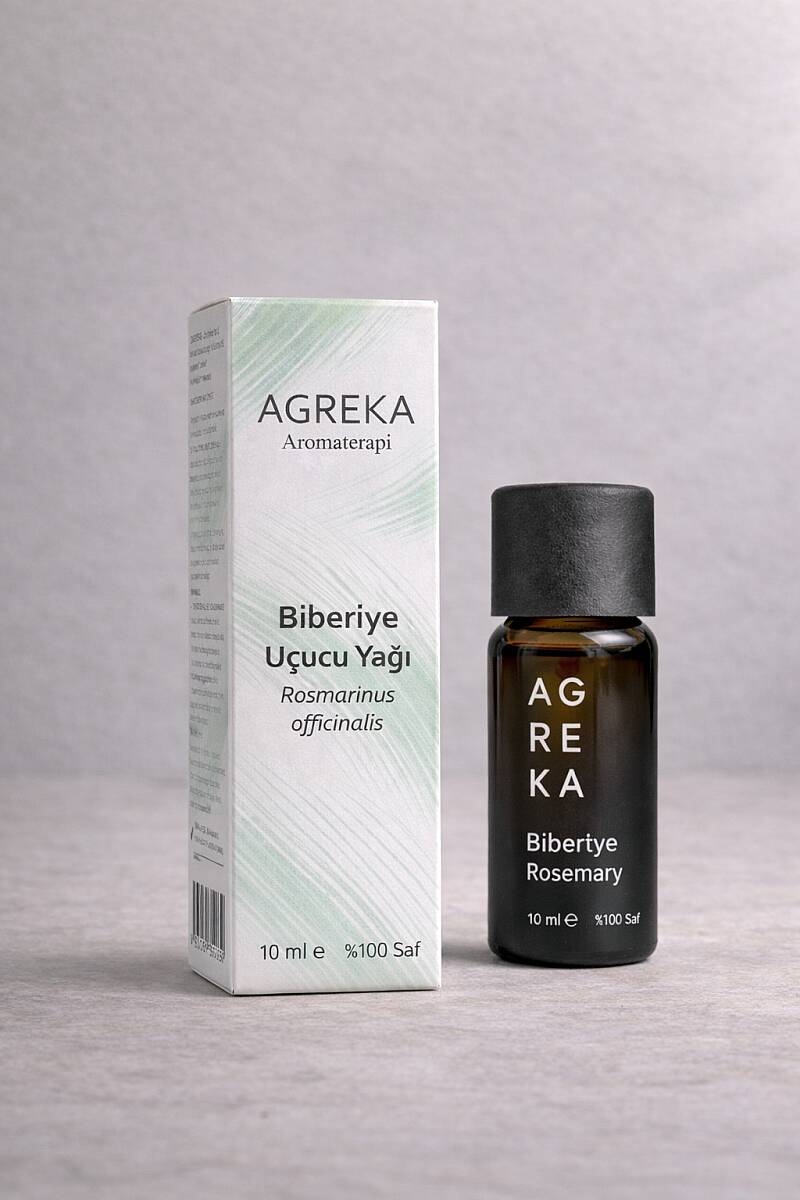
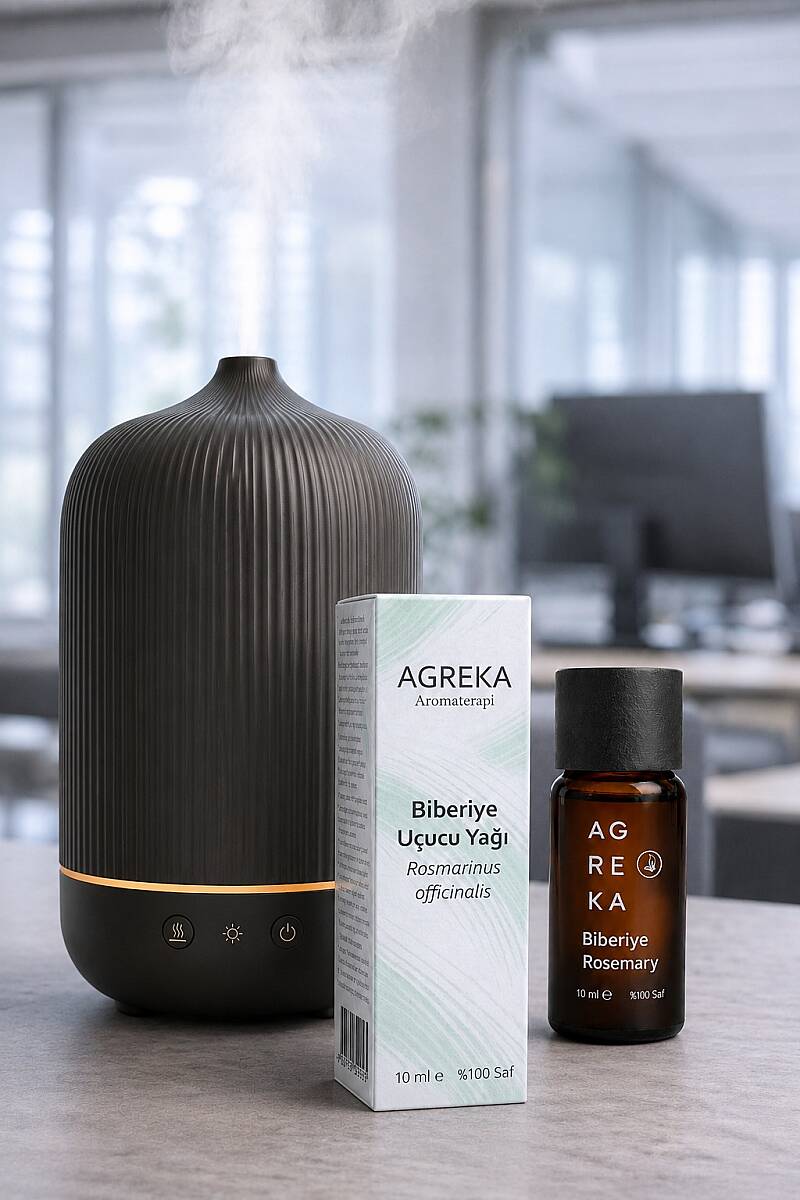
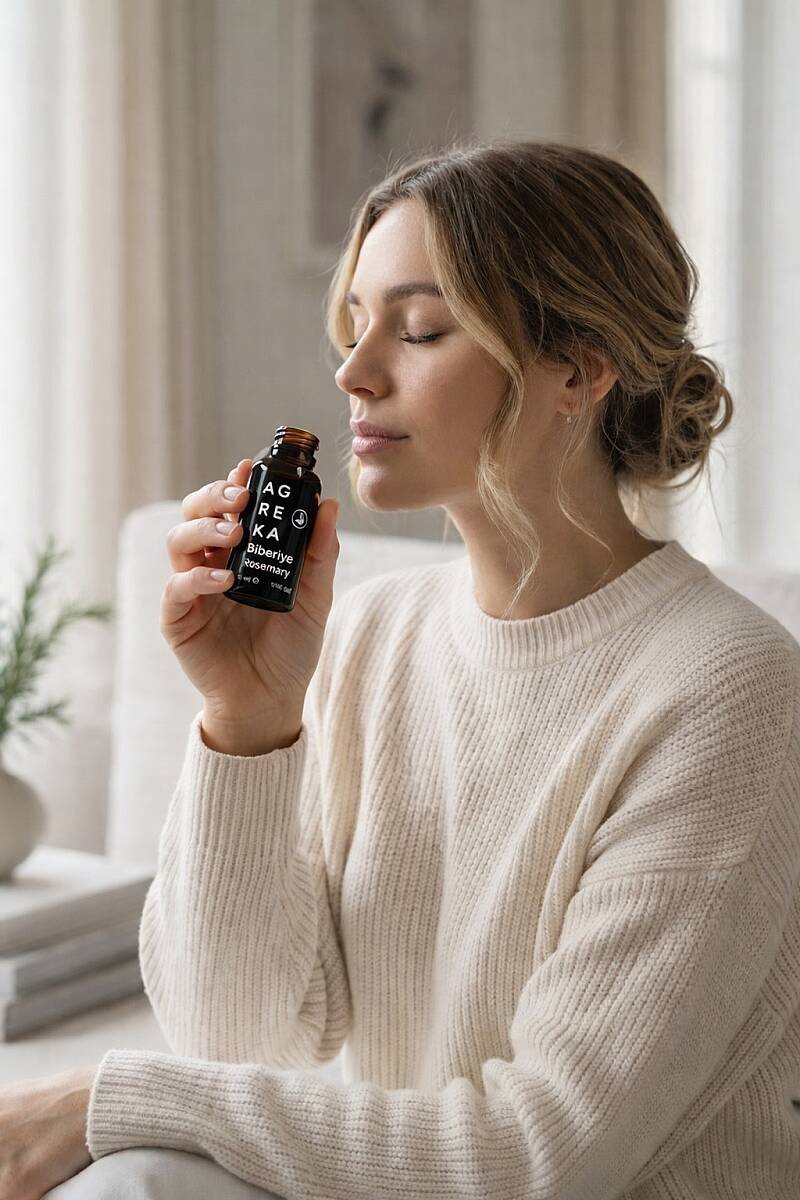

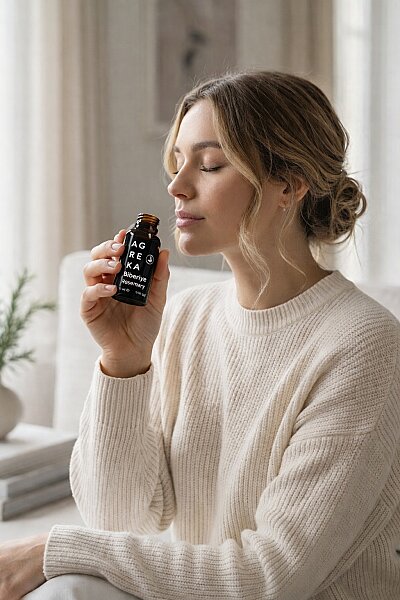

Rosemary Essential Oil 10 ml


Rosemary Essential Oil (Rosmarinus officinalis) is one of the most widely used stimulating essential oils in aromatherapy. It is especially preferred for hair care, scalp care, muscle care routines, and aromatic applications that support mental focus.
Agreka Rosemary Essential Oil is 100% pure and obtained through steam distillation.
Botanical Information
Ingredients: Rosemary Essential Oil, Limonene* (*Naturally occurring constituent of essential oils)
Botanical (Latin) Name: Rosmarinus officinalis (ct. 1,8-cineole)
Plant Family: Lamiaceae (Mint Family)
Origin: Tunisia
Extraction Method: Steam Distillation
Plant Part Used: Flowering Herb
Color: Clear to Pale Yellow
Aromatic Profile: Fresh, strong, vibrant, and herbaceous
Aromatic Note: Middle – Top Note
Product Information
Who Can Use It?
Suitable for everyone except pregnant or breastfeeding women, children under 6 years of age, and individuals with a history of epilepsy or uncontrolled hypertension.
Intended Uses / Product Benefits:
- Supports Hair Care and Helps Reduce Hair Loss
When diluted and applied to the scalp, Rosemary Essential Oil helps support healthy hair growth and may assist in reducing hair loss.
2. Supports Relief of Itching, Redness, and Skin Irritation
In vitro studies have reported that Rosemary Essential Oil exhibits antifungal and antimicrobial activity. When properly diluted and applied topically, it may help soothe the skin.
3. Supports a Fresher Atmosphere and Comfortable Breathing
It can be used through inhalation in a diffuser or oil burner, or as a steam inhalation. It may help create a fresher, more invigorating atmosphere.
4. Supports Mental Alertness and Focus
Human clinical studies have demonstrated a positive association between inhaling Rosemary Essential Oil and cognitive performance. It can be used in a diffuser or oil burner to help promote mental alertness and concentration.
5. Helps Support Muscle Care and Massage Applications
When diluted, Rosemary Essential Oil can be used as a massage oil to help relieve the feeling of muscle fatigue and stiffness after exercise.
CLICK HERE TO READ OUR BLOG ARTICLE
Directions for Use
1) Hair & Scalp Care
Add 6–10 drops of Rosemary Essential Oil to 10 ml (approximately 1 tablespoon) of a carrier oil.
Massage into the scalp and leave on for at least 30 minutes before washing your hair.
For enhanced results, apply before bedtime and wash your hair the following morning.
2) Topical Application
Add 2–3 drops of Rosemary Essential Oil to 1 teaspoon (5 ml) of a carrier oil (such as sesame or sweet almond oil).
Mix well and gently massage onto the desired area using circular motions.
3) Diffuser Use
Add 5–6 drops of Rosemary Essential Oil to your diffuser or oil burner.
Diffuse for 30 minutes, then turn it off. Repeat 2–3 times daily if desired.
- Children aged 6–12: Use 1–2 drops.
- Children aged 13–18: Use 2–3 drops and diffuse for 15 minutes.
4) Steam Inhalation
Add 3–4 drops of Rosemary Essential Oil to 500 ml of hot water in a glass bowl.
Cover your head and the bowl with a towel, keep your eyes closed, and inhale deeply for 5–10 minutes.
Safety Information
Legal Disclaimer
In compliance with applicable laws and advertising regulations, we do not promote herbal wellness products by referring to specific diseases or therapeutic indications.
Our products are not medicines; they are herbal wellness products. They are not intended to diagnose, treat, cure, or prevent any disease. The benefits mentioned are based on academic research regarding the individual ingredients.
Storage Conditions
Store tightly closed in a cool, dry place, out of the reach of children and protected from direct sunlight.
Safety & Warnings
- Always dilute essential oils in a carrier oil before topical application.
- To ensure skin compatibility, you may perform a patch test before first use.
- For external use only. Do not ingest.
- Avoid contact with the eyes. In case of contact, rinse thoroughly with plenty of water.
- Do not use if you have a known allergy to any of the ingredients.
- Individuals with hypertension or sensitivity to stimulating essential oils should use Rosemary Essential Oil with caution, particularly when inhaling or using it in high concentrations.
- If you have a chronic medical condition or are taking prescription medication, consult your healthcare professional before use.
Frequently Asked Questions
1) How do I use Rosemary Essential Oil for hair care?
Add 6–10 drops to 10 ml of a carrier oil, then massage into the scalp.
2) Can Rosemary Essential Oil be used in a diffuser?
Yes. Add 5–6 drops to a diffuser or oil burner to help create a fresh and invigorating atmosphere.
3) Can Rosemary Essential Oil be applied to the skin?
Yes, when properly diluted. Add 2–3 drops to 5 ml of a carrier oil before applying as a massage oil.
4) What is Rosemary Essential Oil commonly used for?
In aromatherapy, it is commonly used for hair care, massage applications, and aromatic practices that support mental focus and alertness.
5) Can Rosemary Essential Oil be used without dilution?
Essential oils are highly concentrated. For this reason, they are generally recommended to be diluted with a carrier oil before topical use.
Academic References
[1] Borges, R. S. et al. (2019). Rosmarinus officinalis essential oil: A review of its phytochemistry, anti-inflammatory activity, and mechanisms of action involved. Journal of Ethnopharmacology.
[2] Moss, M., Oliver, L. (2012). Plasma 1,8-cineole correlates with cognitive performance following exposure to rosemary essential oil aroma. Therapeutic Advances in Psychopharmacology.
[3] Sayorwan, W. et al. (2012). Effects of Inhaled Rosemary Oil on Subjective Feelings and Activities of the Nervous System. Scientifica.
[4] Satou, T. et al. (2018). The effect of inhalation of essential oil from Rosmarinus officinalis on scopolamine-induced Alzheimer’s type dementia model mice. Flavour and Fragrance Journal.
[5] Rasković A, Milanović I, Pavlović N, Milijašević B, Ubavić M, Mikov M. Analgesic effects of rosemary essential oil and its interactions with codeine and paracetamol in mice. European Review for Medical and Pharmacological Sciences. 2015;19:165–172.
[6] Moss, M., Cook, J., Wesnes, K., & Duckett, P. (2003). Aromas of rosemary and lavender essential oils differentially affect cognition and mood in healthy adults. International Journal of Neuroscience, 113(1), 15–38.
[7] Moss, M., & Oliver, L. (2012). Plasma 1,8-cineole correlates with cognitive performance following exposure to rosemary essential oil aroma. Therapeutic Advances in Psychopharmacology, 2(3), 103–113.
[8] Pengelly, A., Snow, J., Mills, S. Y., Scholey, A., Wesnes, K., & Butler, L. R. (2012). Short-term study on the effects of rosemary on cognitive function in an elderly population. Journal of Medicinal Food.
[9] Filiptsova, O. V., Gazzavi-Rogozina, L. V., Timoshyna, I. A., Naboka, O. I., Dyomina, Y. V., & Ochkur, A. V. (2017). The essential oil of rosemary and its effect on the human short-term memory. Journal of Intercultural Ethnopharmacology
[10] Jiang, Y., Wu, N., Fu, Y.-J., Wang, W., Luo, M., Zhao, C.-J., & Zu, Y.-G. (2011). Chemical composition and antimicrobial activity of the essential oil of Rosemary. Food Control, 22(6), 801–806.
[11] Wang, W., Wu, N., Zu, Y.-G., & Fu, Y.-J. (2012). Antibacterial activity and anticancer activity of Rosmarinus officinalis L. essential oil compared to its main components. Molecules, 17(3), 2704–2713
[12] Ghavam, M., Afzali, A., & Manca, M. L. (2022). GC–MS analysis and antimicrobial activities of a ... Rosmarinus officinalis essential oil
[13] Boukhobza, Z., et al. (Yıl/dergi makalede). Essential oil of Rosmarinus officinalis L. … 1,8-cineole chemotype … in vitro antifungal activity (Fusarium oxysporum f. sp. albedinis).
[14] Sudhoff, H., et al. (2015). 1,8-Cineol reduces mucus-production in a novel human ex vivo model of rhinosinusitis. PLOS ONE, 10(7), e0133040.
[15] Kehrl, W., Sonnemann, U., & Dethlefsen, U. (2004). Therapy for acute nonpurulent rhinosinusitis with cineole: Results of a double-blind, randomized, placebo-controlled trial. The Laryngoscope, 114(4), 738–742.
[16] Fischer, J., Dethlefsen, U., & Ludwig, J. (2013). Efficacy of cineole in patients suffering from acute bronchitis: A placebo-controlled double-blind trial. Cough, 9, 25.
[17] Pieracci, Y., et al. (2021). Antimicrobial Activity and Composition of Five Rosmarinus officinalis L. Cultivars Essential Oils.Plants.
[18] Murata K., Noguchi K., Kondo M., Onishi M., Watanabe N., Okamura K., Matsuda H. (2013). Promotion of hair growth by Rosmarinus officinalis leaf extract. Phytother Res. 2013 Feb;27(2):212-7.
[19] Panahi Y., Taghizadeh M., Marzony E.T., Sahebkar A. (2015). Rosemary oil vs minoxidil 2% for the treatment of androgenetic alopecia: a randomized comparative trial. Skinmed. Jan-Feb 2015;13(1):15-21.
[20] Harries M. Ji, Sun J., Paus R., King Jr L.E. (2010). Management of alopecia areata. BMJ. 2010 Jul 23;341:c3671.
[21] Hay I.C., Jamieson M., Ormerod A.D. (1998) Randomized trial of aromatherapy. Arch Dermatol, 1998 Nov;134(11):1349-52.
