Tea Tree Essential Oil (Melaleuca alternifolia)
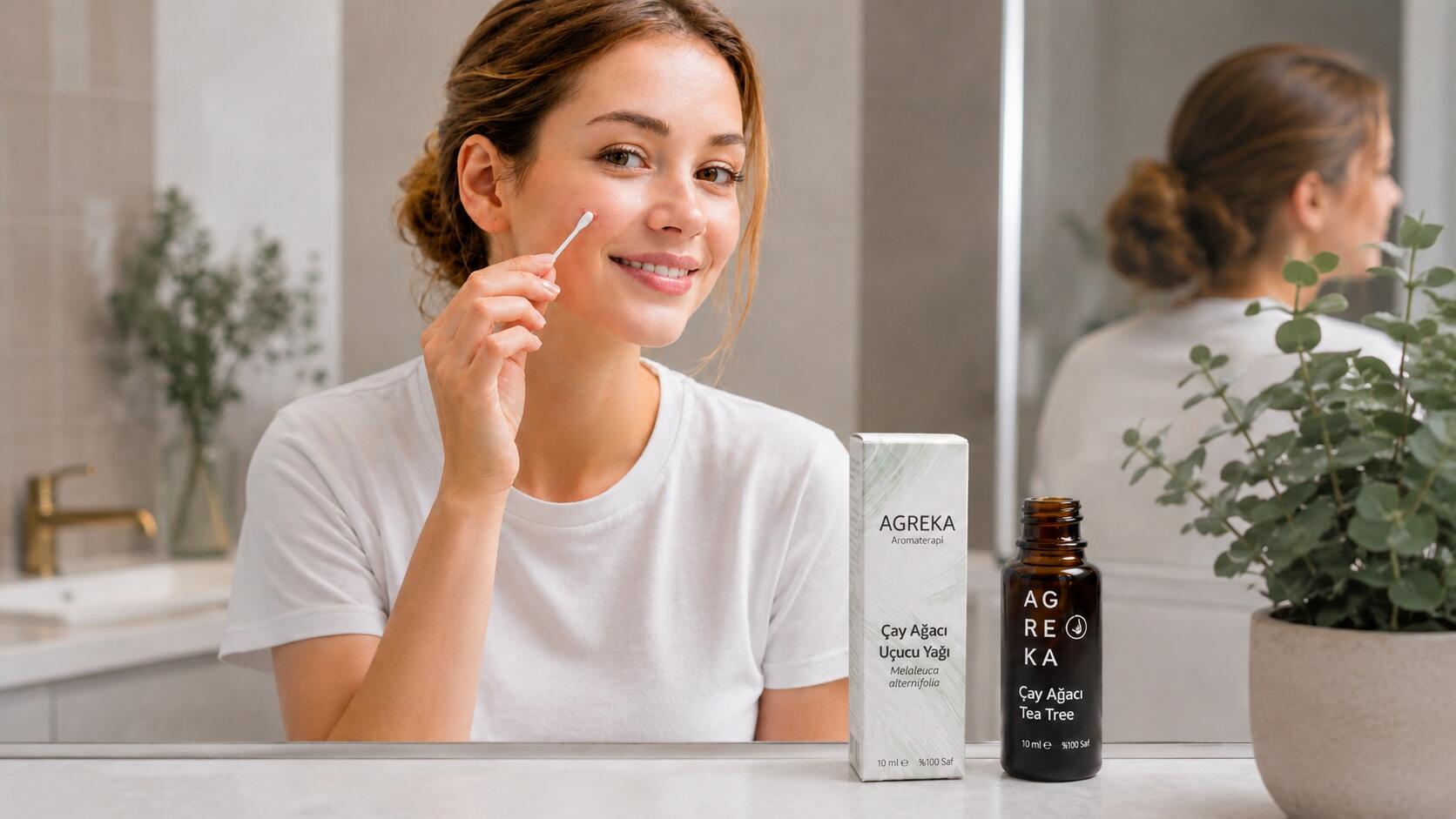
Benefits, Uses, and Scientific Evidence
Tea tree essential oil is one of the most extensively studied and widely used essential oils in aromatherapy due to its powerful antimicrobial, antifungal, and antiviral properties. Its use is supported by both traditional knowledge and modern scientific research, particularly in the areas of skin infections, respiratory conditions, oral and dental care, and immune support.
Tea Tree Essential Oil – General Information
Botanical (Latin) Name:Melaleuca alternifolia
Plant Family: Myrtaceae (Myrtle Family)
Origin: Australia, New Zealand
Extraction Method: Steam distillation
Plant Part Used: Leaves
Color: Clear to pale yellow
Aroma Profile: Spicy, mild, balsamic
Aromatic Note: Middle to middle-top note
Chemical Composition (Key Active Components)
The therapeutic properties of tea tree essential oil are primarily associated with its monoterpene alcohols and monoterpene hydrocarbons. The principal constituents commonly identified through GC/MS analysis include:
- Terpinen-4-ol (the principal active constituent)
- γ-Terpinene
- α-Terpinene
- 1,8-Cineole
- α-Terpineol
High-quality tea tree essential oil should contain a high proportion of terpinen-4-ol and a low proportion of 1,8-cineole.
History and Traditional Use
Tea tree has been used by Aboriginal Australians for centuries to support the care of wounds, infections, and respiratory conditions.
Crushed leaves were applied directly to wounds, while leaf infusions were used for inhalation and cleansing. In the early 20th century, recognition of its antiseptic properties led to its widespread use in modern medicine and cosmetics.
Benefits of Tea Tree Essential Oil
Support for Acne, Inflamed Skin, and Infected Skin Conditions
Tea tree essential oil is used as supportive care for acne, acne rosacea, boils, abscesses, rosacea, infected wounds, varicose ulcers, and dermal fungal infections.
Its antibacterial and anti-inflammatory effects are particularly associated with microorganisms such as Propionibacterium acnes and Staphylococcus aureus. [1] [2]
Fungal Infections of the Skin, Feet, Nails, and Scalp
Tea tree essential oil is widely used for athlete’s foot, fungal nail infections, ringworm, dandruff, candidiasis, and other dermal fungal conditions.
Its antifungal activity has been demonstrated particularly against Candida albicans and dermatophytes. [1] [3]
Viral Skin Lesions and Parasitic Conditions
In traditional aromatherapy, tea tree essential oil is used as supportive care for cold sores caused by Herpes simplex, wart-like lesions, head lice, scabies, and insect bites. [4] [5] [6]
Respiratory Infections and the Common Cold
Tea tree essential oil is used through inhalation and environmental air-cleansing applications for the common cold, influenza, bronchitis, rhinitis, sinusitis, congestion, cough, sore throat, tonsillitis, and ear infections.
Its antiviral and antibacterial properties support these traditional areas of use. [7] [8]
Oral, Dental, and Digestive Hygiene
Tea tree essential oil is used in mouthwashes and localized oral care products for gingivitis, mouth ulcers, oral thrush, oral candidiasis, and other infections of the mouth. [9]
Immune System and Lymphatic Drainage Support
Tea tree essential oil is considered supportive in cases of weakened immune function and lymphatic congestion.
Its antimicrobial activity may indirectly support the body’s immune response. [10]
Women’s and Urinary System Health
Tea tree essential oil has traditionally been used in aromatherapy for vaginal candidiasis, leucorrhoea, cystitis, urethritis, and urinary tract infections.
These applications should always involve appropriate dilution and professional guidance. [11] [12]
Safety Information
- The Australian government has established a standard for tea tree essential oil. According to this standard, the 1,8-cineole content should not exceed 15%, while the terpinen-4-ol content should be at least 30%.
- No known contraindications or safety concerns have been identified.
- Tea tree essential oil should not be applied to the skin without dilution.
- Professional guidance should be sought before use during pregnancy or breastfeeding and when using it with children.
- It should not be used in children under two years of age.
Scientific References
[1] Carson, C. F., Hammer, K. A., & Riley, T. V. (2006). Melaleuca alternifolia (Tea Tree) Oil: A Review of Antimicrobial and Other Medicinal Properties. Clinical Microbiology Reviews, 19(1), 50–62.
[2] Enshaieh, S., et al. (2007). The Efficacy of 5% Topical Tea Tree Oil Gel in Mild to Moderate Acne Vulgaris. Indian Journal of Dermatology, Venereology and Leprology.
[3] Hammer, K. A., et al. (2012). Antifungal Effects of Melaleuca alternifolia on Candida Species. Journal of Antimicrobial Chemotherapy.
[4] Walton, S. F., McKinnon, M., Pizzutto, S., Dougall, A., Williams, E., & Currie, B. J. (2004). Acaricidal Activity of Melaleuca alternifolia (Tea Tree) Oil: In Vitro Sensitivity of Sarcoptes scabiei var. hominis to Terpinen-4-ol. Archives of Dermatology, 140(5).
[5] Barker, S. C., & Altman, P. M. (2010). A Randomised, Assessor-Blind, Parallel-Group Comparative Efficacy Trial of Three Products for the Treatment of Head Lice in Children: Melaleuca Oil and Lavender Oil, Pyrethrins and Piperonyl Butoxide, and a “Suffocation” Product. BMC Dermatology, 10, 6.
[6] Schnitzler, P., Schön, K., & Reichling, J. (2001). Antiviral Activity of Australian Tea Tree Oil and Eucalyptus Oil Against Herpes Simplex Virus in Cell Culture. Pharmazie, 56(4), 343–347.
[7] Garozzo, A., et al. (2011). In Vitro Antiviral Activity of Melaleuca alternifolia Essential Oil. Letters in Applied Microbiology.
[8] Carson, C. F., Hammer, K. A., & Riley, T. V. (2006). Melaleuca alternifolia (Tea Tree) Oil: A Review of Antimicrobial and Other Medicinal Properties. Clinical Microbiology Reviews, 19(1), 50–62.
[9] Soukoulis, S., & Hirsch, R. (2004). The Effects of a Tea Tree Oil-Containing Gel on Plaque and Chronic Gingivitis. Australian Dental Journal.
[10] de Jesus Raposo, A. C., de Morais, M. G., & Pereira, R. L. S. (2019). Immunomodulatory Activities of Selected Essential Oils: A Review. Molecules, 24(14), 2510.
[11] Di Vito, M., Fracchiolla, G., Mattarelli, P., Modesto, M., & Tamburro, A. (2015). In Vitro Activity of Tea Tree Oil Vaginal Suppositories Against Candida spp. Journal of Clinical & Experimental Microbiology.
[12] Di Vito, M., Fracchiolla, G., Mattarelli, P., Modesto, M., & Tamburro, A. (2016). Probiotic and Tea Tree Oil Treatments Improve Therapy of Vaginal Candidiasis: A Preliminary Clinical Study. Medical Journal of Obstetrics and Gynecology, 4(4), 1090.

Patchouli Essential Oil (Pogostemon cablin)

Eucalyptus Essential Oil (Eucalyptus globulus)

Niaouli Essential Oil (Melaleuca quinquenervia)

Myrtle Leaf Essential Oil (Myrtus communis)

Lemon Essential Oil (Citrus limon)

