Shea Butter (Butyrospermum parkii)
Benefits, Uses, and Scientific Evidence
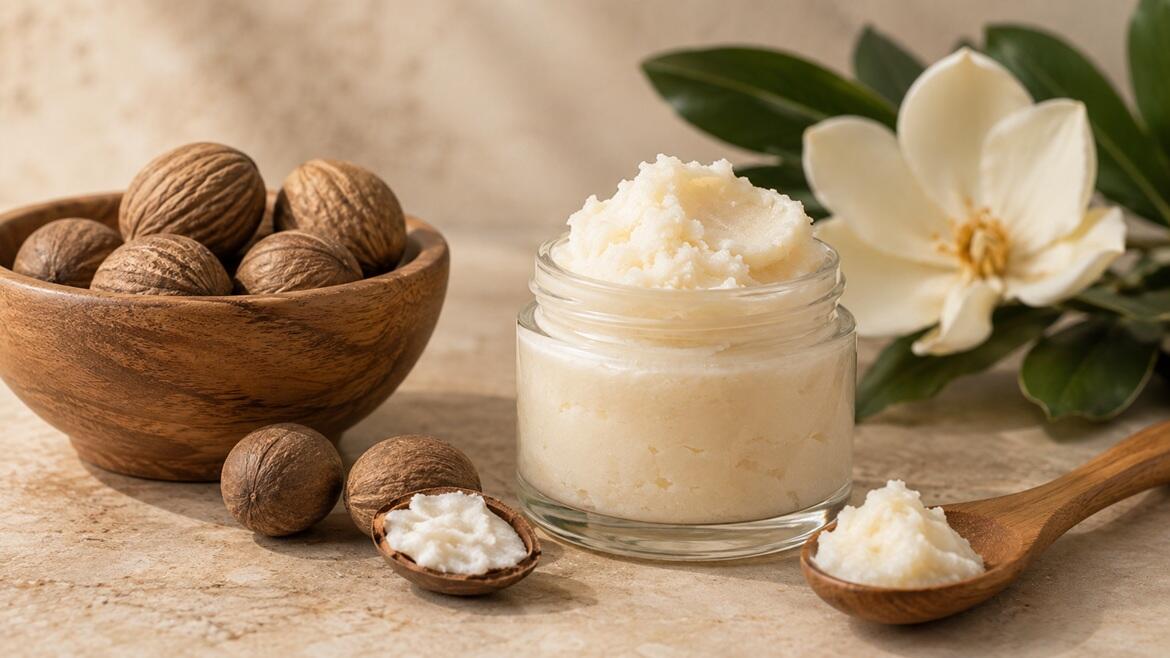
Shea butter is a rich and nourishing carrier (fixed) oil widely used for intensive moisturization, skin barrier repair, support for atopic skin, anti-inflammatory skincare, and hair nourishment.
Its high content of stearic acid, oleic acid, triterpene alcohols, and phytosterols has made it an important subject of dermatological research.
Shea Butter – General Information
Botanical (Latin) Name:Butyrospermum parkii
Origin: West Africa (Ghana, Burkina Faso, Nigeria)
Extraction Method: Cold-pressed
Plant Part Used: Kernel
Color: Ivory to pale yellow
Texture: Rich and dense; solid below 30–35°C
Comedogenic Rating: 0–2
Suitable Skin Types: Dry, very dry, atopic, sensitive, and mature skin
Chemical Composition (Key Active Components)
The therapeutic properties of shea butter are attributed to its fatty acid profile and unsaponifiable fraction, including:
- Stearic acid (~35–45%)
- Oleic acid (~40–50%)
- Linoleic acid
- Triterpene alcohols (Lupeol, Amyrin)
- Phytosterols
- Tocopherols (Vitamin E)
This composition forms the basis of shea butter’s intensive barrier-protective, anti-inflammatory, and antioxidant properties.
History and Traditional Use
The shea tree grows throughout the savannah belt of West and Central Africa. This region, commonly known as the “Shea Belt,” stretches from Senegal to Ethiopia and includes countries such as Mali, Burkina Faso, Ghana, Nigeria, Niger, Benin, Togo, Côte d’Ivoire, Cameroon, Uganda, and Sudan. Today, Ghana and Burkina Faso are among the world’s leading exporters of shea nuts.
For centuries, shea butter has been used throughout Africa for both nutrition and skincare. Traditionally, it has been applied to protect the skin and hair from harsh, dry climates, to care for infant skin, and to support the care of wounds and minor burns. Traditional healers have also used it topically for bruises, rheumatism, and various inflammatory conditions.
During the Middle Ages, shea butter became an important commodity in West African trade networks and eventually reached European markets through coastal trade routes.
Shea butter production remains largely women-led across Africa and provides an important source of income for many rural communities. For this reason, it is often referred to as “Women’s Gold.”
Benefits of Shea Butter
1. Intensive Moisturization and Skin Barrier Repair
Shea butter helps reduce moisture loss by forming a protective film over the skin, making it particularly beneficial for very dry skin, impaired skin barrier, and skin prone to atopic dermatitis.[1] [2]
2. Anti-Inflammatory Activity
Its triterpene alcohols and phytosterols may provide soothing effects for redness, irritation, and inflammatory skin conditions.[3] [4]
3. Skin Elasticity and Anti-Aging Support
Its oleic acid and antioxidant content help nourish the skin and support improvements in loss of elasticity and the appearance of fine lines.[5] [6]
4. Hair and Scalp Care
Due to its rich texture, shea butter provides nourishing and protective care for dry hair ends, hair breakage, and dry scalp conditions.[7]
Safety Information
- Shea butter is generally well tolerated.
- It has a low comedogenic potential.
- It softens at warmer temperatures; if a solid consistency is preferred, store it in a cool place.
Scientific References
[1] Alander, J., & Andersson, A. C. (2002). The Shea Butter Family – The Complete Emollient Range for Skin Care Formulations. Cosmetics and Toiletries Manufacture Worldwide, 28–32.
[2] Alander, J. (2004). Shea Butter – A Multifunctional Ingredient for Food and Cosmetics. Lipid Technology, 16, 202–205.
[3] Nandini, V., Rina, C., Rakha, H. D., & Hemant, K. G. (2012). Anti-Inflammatory Effects of Shea Butter Through Inhibition of iNOS, COX-2, and Cytokines via the NF-κB Pathway in LPS-Activated J774 Macrophage Cells. Journal of Complementary and Integrative Medicine, 9(1), 1–11.
[4] Akihisa, T., Kojima, N., Kikuchi, T., et al. (2010). Anti-inflammatory and Chemopreventive Effects of Triterpene Cinnamates and Acetates from Shea Butter. Journal of Oleo Science, 59(6), 273–280.
[5] Ferreira, M. S., et al. (2021). Trends in the Use of Botanicals in Anti-Aging Cosmetics. Molecules, 26(12), 3584.
[6] Asher, A. S., et al. Investigation of the In Vitro Effects of Shea Butter on Skin Barrier Function and Hydration Using Analytical Chemistry Methodologies. DOI:10.30538/psrp-ojc2025.0022
[7] Ayanlowo, O., et al. (2021). Shea Butter as Skin, Scalp, and Hair Moisturizer in Nigerians. Dermatologic Therapy, 34(2), e14863.

Patchouli Essential Oil (Pogostemon cablin)

Eucalyptus Essential Oil (Eucalyptus globulus)

Niaouli Essential Oil (Melaleuca quinquenervia)

Myrtle Leaf Essential Oil (Myrtus communis)

Lemon Essential Oil (Citrus limon)

