
Rosehip Seed Oil (Rosa rubiginosa)
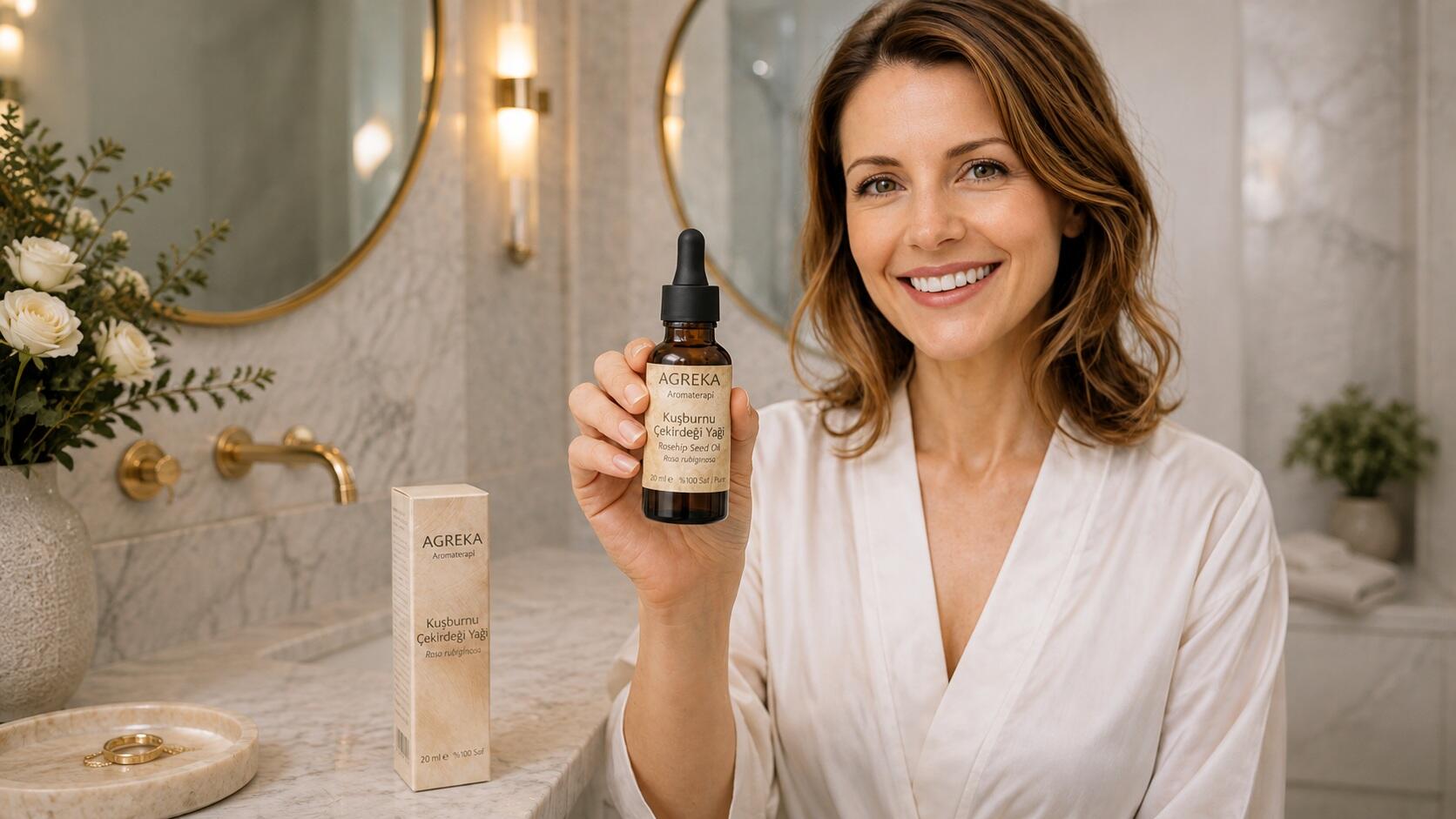
Benefits, Uses, and Scientific Evidence
Rosehip seed oil is a highly valued carrier (fixed) oil widely used to support skin regeneration, the appearance of dark spots, fine lines, scar care, and skin barrier repair.
Because of its high concentration of linoleic acid and naturally occurring retinoid precursors, rosehip seed oil occupies an important place in dermatological research.
Rosehip Seed Oil – General Information
Botanical (Latin) Name:Rosa rubiginosa
Origin: Chile, Europe, Türkiye, South Africa
Extraction Method: Cold-pressed
Plant Part Used: Seeds
Color: Orange to reddish
Texture: Light to medium-weight, fast-absorbing
Comedogenic Rating: 1
Suitable Skin Types: Dry, mature, unevenly pigmented skin, and skin prone to post-acne marks
Chemical Composition (Key Active Components)
The biological properties of rosehip seed oil are associated with its rich fatty acid profile and antioxidant content, including:
- Linoleic acid (Omega-6, approximately 40–50%)
- Alpha-linolenic acid (Omega-3)
- Oleic acid (Omega-9)
- Trans-retinoic acid derivatives (natural retinoid precursors)
- Carotenoids (beta-carotene)
- Vitamin E (tocopherols)
These constituents provide the basis for the oil’s skin-regenerating, antioxidant, and barrier-supporting properties.
History and Traditional Use
Rosehips are the bright red to orange fruits that develop after flowering in wild rose species, particularly Rosa canina, the South American Rosa rubiginosa, and Rosa moschata. These small, rounded fruits have been valued for centuries as both a food and a traditional remedy.
Rosehips have historically been prized for their exceptionally high vitamin C content and have long been used to support immune health. During World War II, when citrus imports into the United Kingdom were severely limited, the British government encouraged citizens to gather wild rosehips. The resulting syrups were distributed to children and the general population as an important dietary source of vitamin C.
Ethnobotanical records indicate that Indigenous communities living in the Andes Mountains of South America traditionally used rosehips to support wound care and skin regeneration. In Anatolia, rosehip fruits have also been used traditionally both internally (as teas and syrups) and externally for various skin concerns.
The use of oil extracted specifically from Rosa rubiginosa seeds for the treatment of scars and burn marks became more systematically documented in South America during the mid-20th century.
Rosehip seed oil is obtained through cold pressing and is naturally rich in linoleic acid (Omega-6) and alpha-linolenic acid (Omega-3). It also contains naturally occurring tocopherols and carotenoids, contributing to its antioxidant properties.
One of its principal bioactive constituents consists of naturally occurring all-trans retinoic acid precursors, regarded as natural precursors of vitamin A, which is known to play an important role in tissue regeneration and skin remodeling.
Since the 1980s, clinical and experimental studies have suggested that rosehip seed oil may support the skin barrier, help reduce transepidermal water loss (TEWL), and improve the appearance of scars. Because of its high concentration of unsaturated fatty acids, it absorbs rapidly without leaving a heavy or greasy residue, earning its reputation as a “dry oil.”
Benefits of Rosehip Seed Oil
1. Skin Regeneration and Scar Support
Rosehip seed oil helps support cellular renewal and tissue regeneration in the appearance of acne scars, wounds, burns, surgical scars, and stretch marks. [1] [2]
2. Support for Uneven Skin Tone and Hyperpigmentation
Thanks to its natural retinoid precursors and carotenoid content, rosehip seed oil may help improve the appearance of hyperpigmentation, sunspots, and uneven skin tone. [3] [4]
3. Antioxidant Protection and Photoaging Support
Its high levels of Omega-3 fatty acids, carotenoids, and tocopherols help protect the skin against free radical damage associated with photoaging. [3] [5] [6] [7]
4. Skin Barrier Support and Moisture Retention
Its rich linoleic acid content helps maintain the integrity of the skin’s lipid barrier while reducing transepidermal water loss (TEWL). [8]
5. Anti-Inflammatory Activity
Omega-3 and Omega-6 fatty acids contribute to the regulation of inflammatory responses within the skin. [9]
Safety Information
- Rosehip seed oil is generally well tolerated.
- Because it is susceptible to oxidation, it should be stored in a cool, dark place.
- Excessive use on actively acne-prone skin may contribute to clogged pores in some individuals.
Scientific References
[1] Valerón-Almazán, P., Gómez-Duaso, A. J., Santana-Molina, N., García-Bello, M. A., & Carretero, G. (2015). Evolution of Post-Surgical Scars Treated with Pure Rosehip Seed Oil. Journal of Cosmetics, Dermatological Sciences and Applications. 5:161–167.
[2] Belkhelladi, M. (2024). Rosehip Extract and Wound Healing: A Review. Journal of Cosmetic Dermatology. 23(1):62–67.
[3] Oargă, D. P., Cornea-Cipcigan, M., Nemes, S. A., et al. (2025). The Effectiveness of a Topical Rosehip Oil Treatment on Facial Skin Characteristics: A Pilot Study on Wrinkles, UV Spots Reduction, Erythema Mitigation and Age-Related Signs. Cosmetics. 12(3):125.
[4] Araujo, A. M. (2022). Evaluation of the Activity and Efficacy of Rosa canina Oil in Skin Hyperpigmentation Processes. Research in Skin Disorders.
[5] Poljšak, B., & Dahmane, R. (2012). Free Radicals and Extrinsic Skin Aging. Article ID 135206.
[6] Böhm, V., Fröhlich, K., & Bitsch, R. (2003). Rosehip—A “New” Source of Lycopene? Molecular Aspects of Medicine. 24(6):385–389.
[7] Winther, K., Hansen, A. S. V., & Campbell-Tofte, J. (2016). Bioactive Ingredients of Rose Hips (Rosa canina* L.) with Special Reference to Their Antioxidant Properties.* Bioactive Targets and Activity of Therapeutic Agents.
[8] Li, X., Li, X., Li, J., et al. (2020). Efficacy and Safety of a Topical Moisturizer Containing Linoleic Acid and Ceramide for Mild-to-Moderate Psoriasis Vulgaris: A Multicenter Randomized Controlled Trial. Dermatologic Therapy. 33(6):e14263.
[9] Calder, P. C. (2015). Functional Roles of Fatty Acids and Their Effects on Human Health. Journal of Parenteral and Enteral Nutrition. 39(Suppl. 1):18S–32S.

Patchouli Essential Oil (Pogostemon cablin)

Eucalyptus Essential Oil (Eucalyptus globulus)

Niaouli Essential Oil (Melaleuca quinquenervia)

Myrtle Leaf Essential Oil (Myrtus communis)

Lemon Essential Oil (Citrus limon)

