
How to Perform a Patch Test
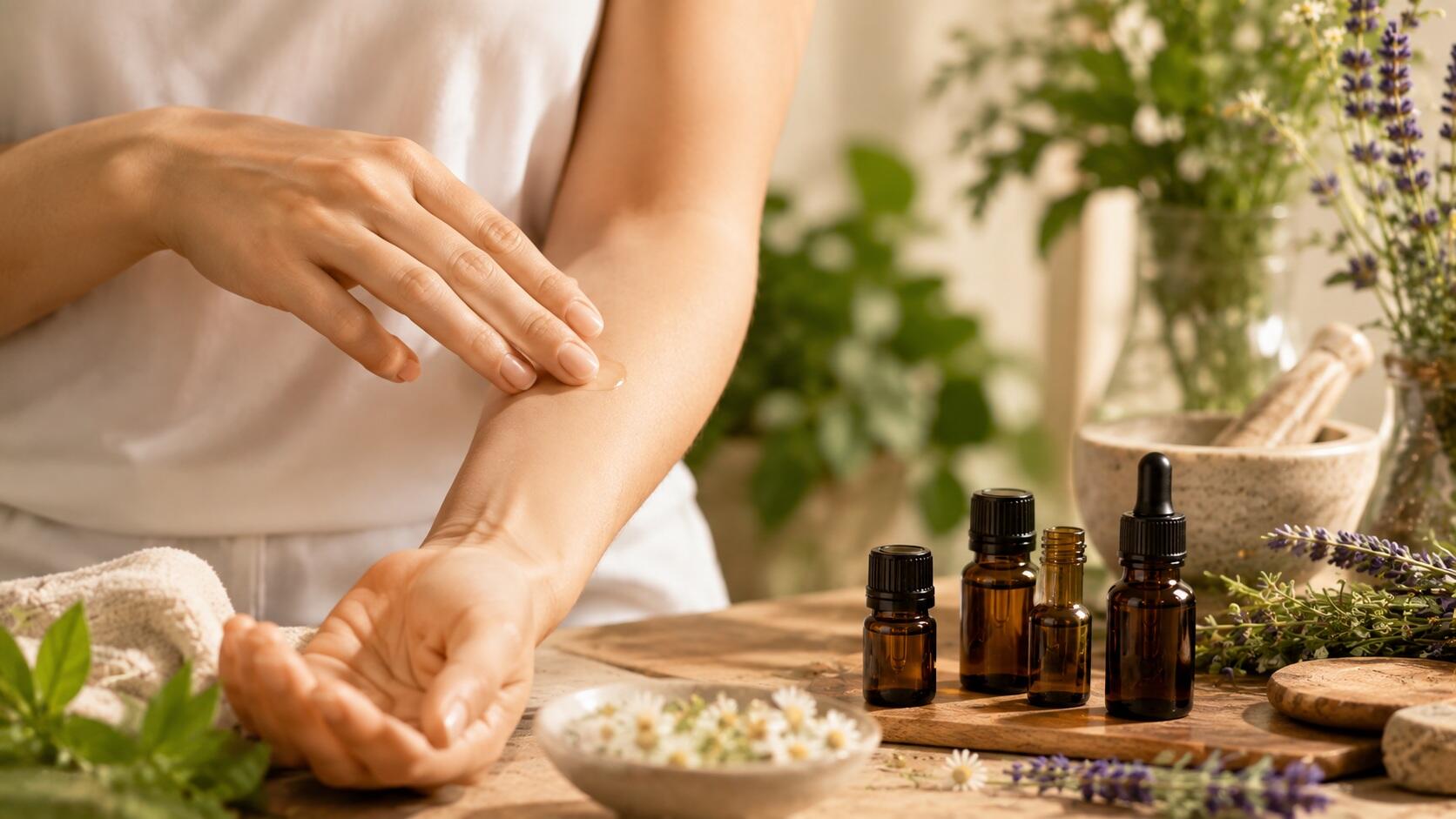
A Guide to Checking Skin Sensitivity Before Using Essential Oils
Essential oils are powerful, biologically active plant extracts. For this reason, one of the fundamental steps in safe aromatherapy practice is performing a patch test before using an essential oil or aromatherapy blend more extensively. A patch test allows you to observe how your skin responds to a particular essential oil or blend and helps reduce the risk of irritation or allergic reactions.
Why Is a Patch Test Important?
Every person’s skin is different, and reactions to essential oils can vary from one individual to another. Even if you have never experienced any problems before, it is always good practice to perform a patch test when:
- Using a new essential oil
- Diluting an essential oil with a different carrier oil
- You have a sensitive or compromised skin barrier
A patch test is particularly important for people with sensitive skin and for those who are new to aromatherapy.
How to Perform a Patch Test
Performing a patch test with essential oils is simple and practical. Follow these steps:
1. Prepare Your Skin
Wash the inside of your forearm with a mild soap and gently pat the area dry. This location is ideal for observing potential skin reactions.
2. Apply the Diluted Essential Oil
Apply a few drops of your properly diluted essential oil to a small area on the inside of your forearm.
Note: Never use an undiluted (neat) essential oil when performing a patch test.
3. Cover the Area
Place a small adhesive bandage over the application site and keep the area dry for the next 24 hours.
4. Observe Your Skin
During the following 24 hours, watch for any signs of:
- Redness
- Burning sensation
- Itching
- Irritation or discomfort
If any of these symptoms occur, remove the bandage and gently wash the area thoroughly with soap and water.
5. Do Not Use the Oil if a Reaction Occurs
If you experience any adverse reaction during the patch test, avoid using that essential oil. Protecting your skin health should always be the priority.
How Should You Interpret the Results?
If, after the 24-hour observation period, you experience no:
- Redness
- Irritation
- Skin sensitivity
then it is generally considered safe to use the diluted essential oil.
However, this does not guarantee that sensitivity cannot develop in the future. Safe aromatherapy always requires ongoing observation and responsible use.
Who Should Always Perform a Patch Test?
A patch test is especially recommended for:
- Individuals with sensitive or reactive skin
- People with allergies or allergic tendencies
- Pregnant women
- Anyone preparing products for children
- Anyone trying a new essential oil or a new aromatherapy formulation
For these groups, performing a patch test is an essential part of safe aromatherapy practice.
A patch test is a simple yet highly effective step for ensuring the safe topical use of essential oils. Aromatherapy is the art of building a mindful relationship with nature, and that relationship begins with small—but essential—safety practices.

Patchouli Essential Oil (Pogostemon cablin)

Eucalyptus Essential Oil (Eucalyptus globulus)

Niaouli Essential Oil (Melaleuca quinquenervia)

Myrtle Leaf Essential Oil (Myrtus communis)

Lemon Essential Oil (Citrus limon)

