
Coconut Oil (Cocos nucifera)
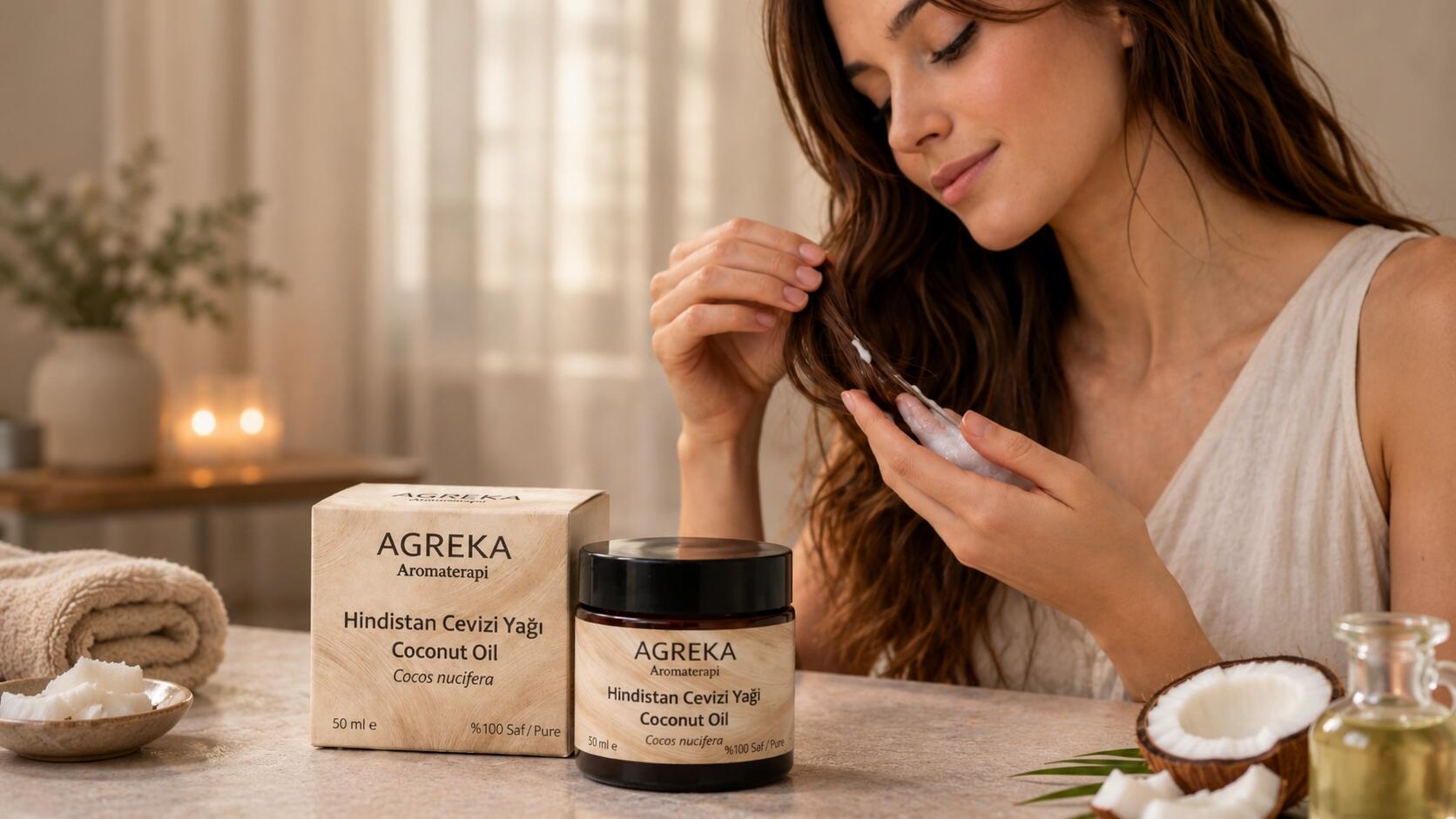
Benefits, Uses, and Scientific Evidence
Coconut oil is a nourishing carrier (fixed) oil widely used for supporting skin barrier repair, providing intensive moisturization, offering antimicrobial support, caring for atopic-prone skin, and protecting the hair.
Thanks to its high content of saturated fatty acids, coconut oil forms a protective layer on the skin. Modern dermatological research particularly supports its use for atopic dermatitis and skin barrier impairment.
Coconut Oil – General Information
Botanical (Latin) Name:Cocos nucifera
Origin: Southeast Asia, India, the Philippines, Indonesia, Hawaii
Extraction Method: Cold-pressed
Plant Part Used: Fruit flesh (kernel)
Color: White (solid state) – opaque (liquid state)
Texture: Rich; solid below 24°C (75°F)
Comedogenic Rating: 3–4 (moderate to high)
Suitable Skin Areas: Dry and very dry areas such as the lips, knees, and elbows
Chemical Composition (Key Active Components)
Coconut oil contains a high concentration of medium-chain saturated fatty acids (MCFAs), including:
- Lauric acid (approximately 45–50%) – the primary fatty acid
- Myristic acid
- Palmitic acid
- Capric acid
- Caprylic acid
These constituents are responsible for coconut oil’s antimicrobial and skin barrier-supporting properties.
History and Traditional Use
The coconut palm (Cocos nucifera), a member of the Arecaceae (Palm) family, is a valuable tropical plant that has been used for both nutrition and personal care for thousands of years.
The earliest records of coconut cultivation date back to the second millennium BCE. In the Ayurvedic tradition, coconut has long been regarded as a cooling and nourishing natural resource. It also appears in 9th-century Chinese records and medieval travel accounts.
During the 16th century, Portuguese sailors named the fruit “coco,” meaning “head” or “face,” because the three indentations on the shell resembled a human face. The botanical name was later derived from this word.
Fresh coconut flesh is widely consumed as food, while shredded coconut is commonly used in desserts. Coconut milk has become an important ingredient in plant-based diets. The fruit flesh is rich in dietary fiber and contains minerals such as magnesium, potassium, and calcium, together with vitamins E and K.
Coconut oil is extracted from the flesh of the fruit, preferably by cold pressing. It remains liquid above 24°C (75°F) and becomes white and solid at lower temperatures. Approximately 80–90% of its fatty acid composition consists of saturated fats, particularly lauric acid.
For centuries, tropical cultures from Samoa to Central and South America have traditionally used coconut oil to moisturize the skin, nourish the hair, and provide protective care for minor superficial wounds. Today, coconut oil is widely incorporated into modern cosmetics, especially body care products, hair masks, and skin barrier-supporting formulations, while its pure form is increasingly used for natural skincare.
Benefits of Coconut Oil
1. Skin Barrier Support and Intensive Moisturization
Coconut oil provides intensive moisturization for dry and very dry skin, impaired skin barrier function, and atopic-prone skin. Clinical studies involving patients with atopic dermatitis have demonstrated improvements in skin barrier function. [1] [2]
2. Antimicrobial Activity
Due to its high lauric acid content, coconut oil has demonstrated antimicrobial activity against Staphylococcus aureus and certain fungal species. [3] [4]
3. Hair Protection and Reduced Protein Loss
Coconut oil penetrates the hair shaft, helping protect against protein loss, hair breakage, and dryness. [5] [6]
4. Oral and Dental Care
Oil pulling with coconut oil is a traditional practice used to support oral hygiene. Several clinical studies have reported reductions in dental plaque and gingivitis indicators. [7] [8]
Safety Information
- Due to its relatively high comedogenic potential, coconut oil should be used cautiously on acne-prone facial skin.
- Coconut oil becomes liquid in warm environments (above 24°C / 75°F).
Scientific References
[1] Evangelista, M. T. P., et al. The Effect of Topical Virgin Coconut Oil on SCORAD Index, Transepidermal Water Loss, and Skin Capacitance in Mild to Moderate Pediatric Atopic Dermatitis: A Randomized, Double-Blind Clinical Trial. International Journal of Dermatology. 2014;53(1):100–108.
[2] Nadora, D., et al. Prospective Randomized Double-Blind Vehicle-Controlled Study of Topical Coconut and Sunflower Seed Oil-Derived Isosorbide Diesters on Atopic Dermatitis. Dermatitis. 2024 Jan-Feb;35(S1):S62–S69.
[3] Quingyan, L., et al. Antibacterial Activity and Mechanism of Lauric Acid Against Staphylococcus aureus and Its Application in Infectious Cooked Chicken. Foodborne Pathogens and Disease. 2024;21(12):766–773.
[4] Seleem, D., et al. In Vitro Evaluation of Antifungal Activity of Monolaurin Against Candida albicans Biofilms. PeerJ. 2016;4:e2148.
[5] Rele, A. S., & Mohile, R. B. (2003). Effect of Mineral Oil, Sunflower Oil, and Coconut Oil on Prevention of Hair Damage. Journal of Cosmetic Science. 54(2):175–192.
[6] Kaushik, V., et al. Benefit of Coconut-Based Hair Oil via Hair Porosity Quantification. International Journal of Cosmetic Science. 2022;44(3):289–298.
[7] Peedikayil, F. C., et al. Effect of Coconut Oil in Plaque-Related Gingivitis—A Preliminary Report. Nigerian Medical Journal. 2015;56(2):143–147.
[8] Kaushik, M., Reddy, P., Sharma, R., Udameshi, P., Mehra, N., & Marwaha, A. (2016). The Effect of Coconut Oil Pulling on Streptococcus mutans Count in Saliva in Comparison with Chlorhexidine Mouthwash. Journal of Contemporary Dental Practice. 17(1):38–41.

Patchouli Essential Oil (Pogostemon cablin)

Eucalyptus Essential Oil (Eucalyptus globulus)

Niaouli Essential Oil (Melaleuca quinquenervia)

Myrtle Leaf Essential Oil (Myrtus communis)

Lemon Essential Oil (Citrus limon)

