
Citronella Essential Oil (Cymbopogon nardus)
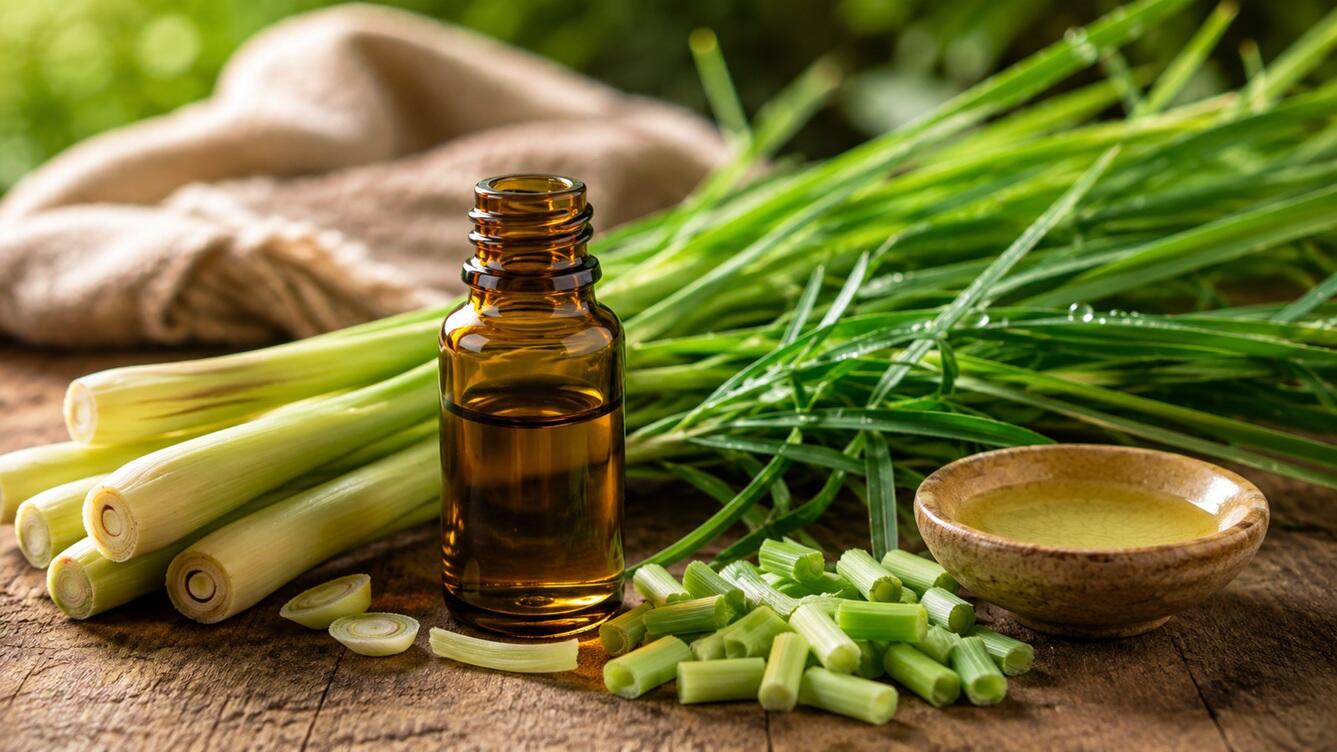
Benefits, Uses, and Scientific Evidence
Citronella essential oil is one of the best-known essential oils in aromatherapy, particularly for its insect-repellent properties, musculoskeletal support, and purifying aromatic profile. Traditional knowledge regarding its use is largely consistent with modern pharmacological and clinical research.
Citronella Essential Oil – General Information
· Botanical (Latin) Name:Cymbopogon nardus (Ceylon citronella)
· Plant Family: Poaceae (Grass Family)
· Origin: Sri Lanka
· Extraction Method: Steam distillation
· Plant Part Used: Grass
· Color: Pale yellow to brownish yellow
· Aroma Profile: Warm, woody, fresh, and grassy
· Aromatic Note: Top note
Chemical Composition (Key Active Components)
The biological effects of citronella essential oil are associated with its aldehyde and monoterpene alcohol content.
Its principal constituents include:
- Citronellal (particularly in Java citronella)
- Geraniol
- Citronellol
- Limonene
- Geranyl acetate
Java citronella is richer in citronellal, an aldehyde compound, than Ceylon citronella.
Ceylon citronella has a softer and more balanced aromatic profile.
History and Traditional Use
Citronella has been used in Southeast Asian folk medicine for centuries to repel insects, relieve muscle discomfort, and purify the air during periods of infection.
Traditionally, it was applied near the entrances of homes, sleeping areas, and clothing and was valued as a protective botanical.
Benefits of Citronella Essential Oil
Insect-Repellent and Air-Purifying Effects
Citronella essential oil demonstrates repellent activity against pests such as mosquitoes, fleas, and lice. This effect is primarily associated with its citronellal, geraniol, and citronellol content.
Citronella has also been recognized by the World Health Organization as a natural insect repellent. [1] [2]
Antiseptic Activity and Respiratory Support
Thanks to its antibacterial and antifungal properties, citronella essential oil is used as an air-purifying and supportive aromatic oil, particularly during cold and flu season.
It has been reported to exhibit inhibitory activity against microorganisms associated with respiratory infections. [3] [4] [5]
Musculoskeletal Support
Citronella essential oil may provide soothing and anti-inflammatory support for the musculoskeletal system.
In traditional aromatherapy, it has been added to massage oils for arthritis, rheumatic discomfort, tendinitis, and muscle stiffness. [6]
Support for Mental and Emotional Fatigue
Citronella essential oil is used for mental and emotional fatigue because of its revitalizing, purifying, and mentally clarifying aromatic effects.
Preclinical studies have also investigated its antinociceptive and calming properties. [7]
Safety Information
- Citronella essential oil should not be applied to the skin without dilution.
- It is classified among substances generally recognized as safe (GRAS).
- The risk of skin sensitization is considered low. However, a patch test is recommended for sensitive skin.
- Professional guidance should be sought before use during pregnancy or breastfeeding and when using it with children.
- For oral use, geraniol may inhibit CYP2B6, creating a potential risk of interaction between citronella oil and medications metabolized by this enzyme.
Scientific References
[1] Maia, M. F., & Moore, S. J. (2011). Plant-Based Insect Repellents: A Review. Malaria Journal.
[2] Yoon, J. K., Kim, K. C., Cho, Y., Gwon, Y. D., Cho, H. S., Heo, Y., Park, K., Lee, Y. W., Kim, M., Oh, Y. K., & Kim, Y. B. (2015). Comparison of the Repellency Effects of Mosquito Repellents Containing DEET, Citronella, and Fennel Oil. Journal of Parasitology Research. 2015:361021.
[3] Silva, J. K. R., Andrade, E. H. A., Guimarães, E. F., Maia, J. G. S., & Setzer, W. N. (2021). Antibacterial Activity of Essential Oils and Their Isolated Constituents Against Staphylococcus aureus and Escherichia coli. Journal of Essential Oil Research. 33(2):1–10.
[4] Tyagi, A. K., & Malik, A. (2012). Antifungal Effects of Cymbopogon citratus and Cymbopogon nardus Essential Oils Against Aspergillus niger. Food Control. 23(2):605–611.
[5] Rahman, M. M., Hossain, M. A., & Paul, S. (2024). Antimicrobial Potential of Commercially Produced Citronella Oil: In Vitro and In Silico Approaches. Journal of Ethnopharmacology. 331:117361.
[6] Caldwell, R. L., & Weerasinghe, P. (2024). Synergizing Nature and Medicine: The Anti-Inflammatory and Analgesic Potential of Essential Oils in Adjunctive Rheumatoid Arthritis Treatment. Advances in Complementary & Alternative Medicine. 8(2).
[7] Sayowan, W., Siripornpanich, V., Piriyapunyaporn, T., Hongratanaworakit, T., Kotchabhakdi, N., & Ruangrungsi, N. (2012). The Harmonizing Effects of Citronella Oil on Mood States and Brain Activities. Journal of Health Research. 26(2):69–75.

Patchouli Essential Oil (Pogostemon cablin)

Eucalyptus Essential Oil (Eucalyptus globulus)

Niaouli Essential Oil (Melaleuca quinquenervia)

Myrtle Leaf Essential Oil (Myrtus communis)

Lemon Essential Oil (Citrus limon)

