Carrot Seed Essential Oil (Daucus carota)
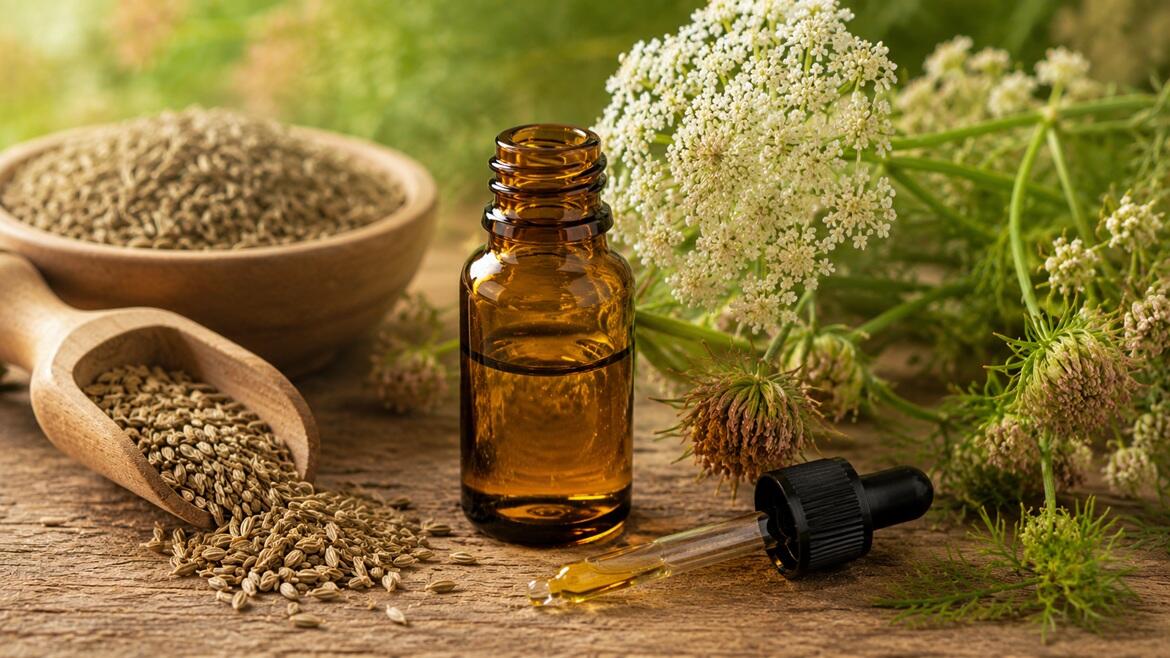
Benefits, Uses, and Scientific Evidence
Carrot seed essential oil is a valuable aromatherapy oil known for its earthy, warm, and slightly sweet aroma. It is particularly used to support skin regeneration, liver and detoxification processes, circulation, hormonal balance, and emotional recovery. Traditional aromatherapy knowledge has gained increasing support from pharmacological and biological research in recent years.
Carrot Seed Essential Oil – General Information
Botanical (Latin) Name:Daucus carota
Plant Family: Apiaceae (Parsley Family)
Origin: France, the Netherlands, Hungary, India
Extraction Method: Steam distillation
Plant Part Used: Dried seeds
Color: Yellow or amber, pale orange to brown
Aroma Profile: Strong, fresh, warm, and spicy
Aromatic Note: Middle to upper-middle note
Chemical Composition (Key Active Components)
The biological effects of carrot seed essential oil are primarily associated with its sesquiterpenes and their oxygenated derivatives. The principal constituents commonly identified through GC/MS analysis include:
- Carotol (the principal characteristic constituent)
- Daucene
- α-Farnesene
- Germacrene D
- β-Bisabolene
- β-Caryophyllene
- β-Selinene (2.2%)
- α-Pinene
History and Traditional Use
Carrot (Daucus carota) has been known since Ancient Greek and Roman times. However, the use of its essential oil developed later through the distillation of the seeds rather than the root.
During the Middle Ages, carrot seed was used in European herbal medicine for its traditional liver-supporting, menstrual-regulating, and detoxifying properties.
In modern aromatherapy literature, carrot seed essential oil is often described as:
- A “skin-regenerating oil”
- A “supporter of cellular recovery”
It is considered one of the key essential oils for mature and damaged skin, particularly within the French school of aromatherapy.
Benefits of Carrot Seed Essential Oil
1. Skin Regeneration and Repair Support
Carrot seed essential oil is used in aromatherapy to provide regenerative and balancing support for:
- Mature skin
- Hyperpigmentation
- Environmental damage caused by UV exposure and oxidative stress
- Uneven skin tone
Its potential to support cellular renewal processes is frequently highlighted in the scientific literature. [1] [2] [3] [4]
2. Antioxidant and Protective Effects
Thanks to its high antioxidant capacity, carrot seed essential oil is regarded as one of the aromatherapeutic oils that may help protect against free radical damage.
This property is important for both skin health and overall cellular balance. [5] [6]
3. Aromatherapeutic Support for Liver and Detoxification Processes
In traditional practice, carrot seed has been regarded as a liver-tonic herb.
Its essential oil is used in aromatherapy, particularly through massage and inhalation, to provide support for the body’s natural detoxification processes. [7] [8]
4. Hormonal and Emotional Balance Support
Thanks to its grounding aroma, carrot seed essential oil may offer balancing and restorative support during:
- Mental fatigue
- Feelings of burnout
- Emotional fluctuations
It is also included in supportive aromatherapy blends used during PMS and menopause. [9]
Safety Information
- Carrot seed essential oil should not be applied to the skin without dilution.
- It is classified as generally recognized as safe (GRAS).
- Consult a healthcare professional before use during pregnancy or if you have a history of epilepsy.
- A patch test is recommended for sensitive skin.
Scientific References
[1] Choi, H. S., et al. (2010). Antioxidative Activities of Daucus carota Seed Essential Oil. Journal of Food Science.
[2] Baser, K. H. C., & Buchbauer, G. (2015). Handbook of Essential Oils: Science, Technology, and Applications. CRC Press.
[3] Butnariu, M. (2014). Carrot (Daucus carota* L.): Phytochemical Profile and Biological Activities.* Journal of Bioequivalence & Bioavailability.
[4] Singh, S., Lohani, A., Mishra, A. K., & Verma, A. (2019). Formulation and Evaluation of Carrot Seed Oil-Based Cosmetic Emulsions. Journal of Cosmetic and Laser Therapy, 21(2), 99–107.
[5] Sbai, I., et al. (2018). Chemical Composition and Antioxidant Activity of the Essential Oil of Wild Carrot (Daucus carota* L.) from Morocco.* Journal of Chemical and Pharmaceutical Research, 10(7), 30–34.
[6] Stanojević, J., Ilić, Z. S., Stanojević, L., Milenković, L., Kovač, R., Lalević, D., Šunić, L., Milenković, A., & Cvetković, D. (2023). Essential Oil Yield, Composition, and Antioxidant Activity in Two Umbel Maturity Stages of Wild Carrot (Daucus carota* L. ssp. carota) from Montenegro.* Horticulturae, 9(3), 328.
[7] Bishayee, A., Sarkar, A., & Chatterjee, M. (1995). Hepatoprotective Activity of Carrot (Daucus carota* L.) Against Carbon Tetrachloride Intoxication in Mouse Liver.* Journal of Ethnopharmacology, 47(2), 69–74.
[8] Shebaby, W. N., Daher, C. F., El-Sibai, M., Bodman-Smith, K., Mansour, A., Karam, M. C., & Mroueh, M. (2015). Antioxidant and Hepatoprotective Activities of the Oil Fractions from Wild Carrot (Daucus carota* ssp. carota).* Pharmaceutical Biology, 53(9), 1285–1294.
[9] Bahrami, R., Ghobadi, A., Behnoud, N., & Akhtari, E. (2018). Medicinal Properties of Daucus carota in Traditional Persian Medicine and Modern Phytotherapy. Journal of Biochemical Technology, Special Issue (2), 107–114.

Patchouli Essential Oil (Pogostemon cablin)

Eucalyptus Essential Oil (Eucalyptus globulus)

Niaouli Essential Oil (Melaleuca quinquenervia)

Myrtle Leaf Essential Oil (Myrtus communis)

Lemon Essential Oil (Citrus limon)

