
Borage Oil (Borago officinalis)
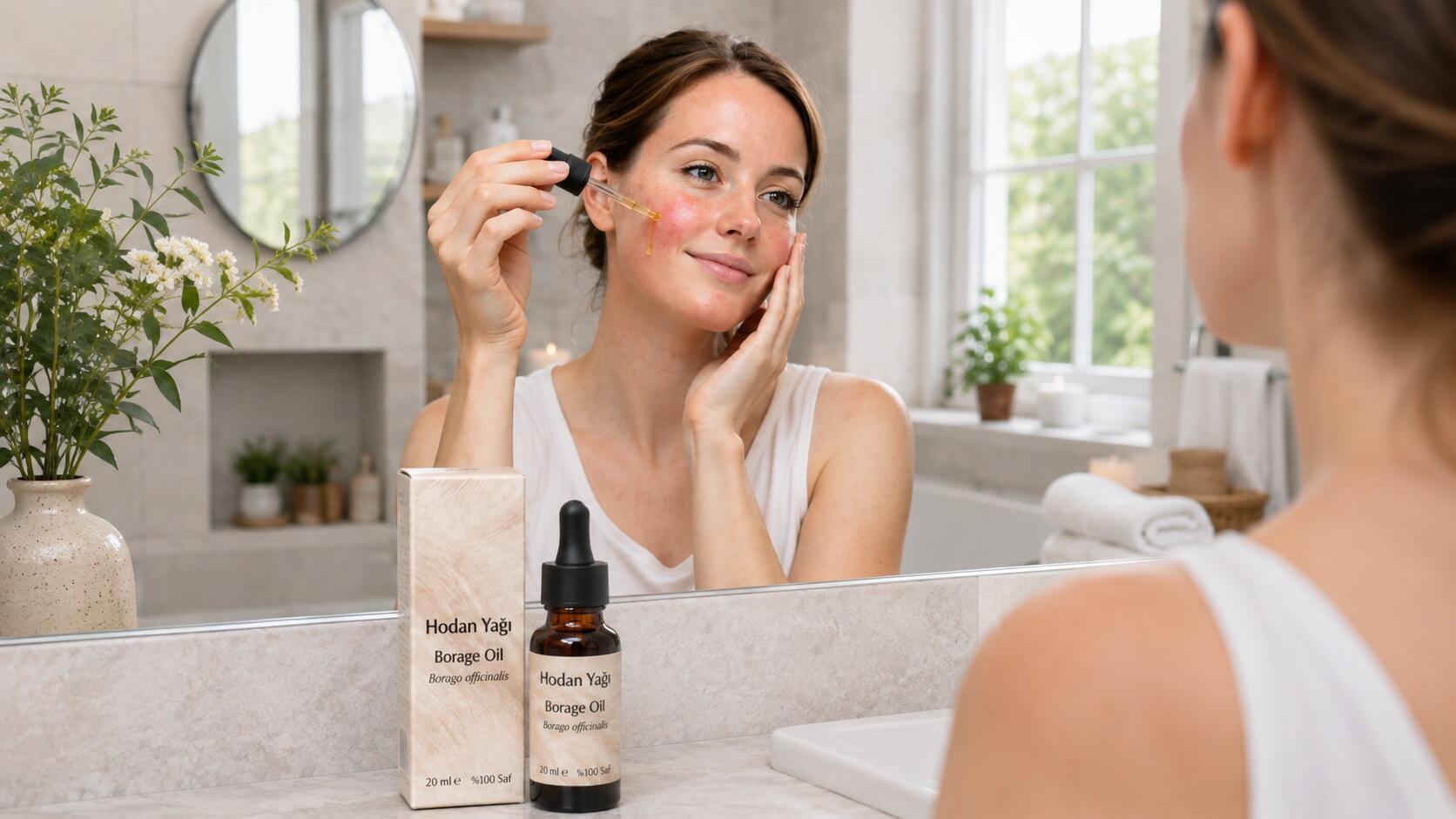
Benefits, Uses, and Scientific Evidence
Borage oil is a highly valued carrier (fixed) oil widely used to support atopic-prone skin, impaired skin barrier function, inflammatory skin conditions, mature skin care, and hormonal well-being.
Because of its exceptionally high content of Gamma-Linolenic Acid (GLA, Omega-6), borage oil holds a unique place in dermatological and immunological research.
Borage Oil – General Information
Botanical (Latin) Name:Borago officinalis
Origin: Mediterranean region, Europe
Extraction Method: Cold-pressed
Plant Part Used: Seeds
Color: Pale yellow to golden
Texture: Light to medium-weight
Comedogenic Rating: 2
Suitable Skin Types: Dry, sensitive, atopic-prone, and mature skin
Chemical Composition (Key Active Components)
The therapeutic properties of borage oil are primarily attributed to its fatty acid profile, including:
- Gamma-Linolenic Acid (GLA, 18–25%) – the principal active constituent
- Linoleic acid (Omega-6)
- Oleic acid (Omega-9)
- Palmitic acid
- Phytosterols
- Vitamin E (tocopherols)
Its exceptionally high GLA content makes borage oil one of the most effective carrier oils for supporting skin barrier function and helping regulate inflammatory processes.
History and Traditional Use
Although the exact origin of the word “borage” remains uncertain, it is commonly associated either with the Latin borago or the Celtic word “borrach,” meaning “courage.”
Throughout medieval Europe, borage was known as the “herb of gladness” and was traditionally believed to relieve melancholy. It was also widely used for skin conditions and inflammatory disorders. The ancient Greek physician Dioscorides wrote that borage “cheers the heart.” The plant is also commonly known as common borage or starflower.
Oil extracted from borage seeds is naturally rich in linoleic acid and particularly gamma-linolenic acid (GLA, Omega-6). Its GLA content typically ranges from 18% to 25%, making it one of the richest botanical sources of this essential fatty acid.
Omega-6 fatty acids play an important role in maintaining epidermal barrier function and the structural organization of skin lipids.
Benefits of Borage Oil
1. Support for Atopic-Prone Skin and Eczema
Borage oil helps support skin barrier repair in cases of atopic dermatitis, eczema-prone skin, and dry skin. The inflammation-modulating effects of GLA have been investigated in clinical studies. [1] [2]
2. Anti-Inflammatory Activity
GLA is metabolized into Prostaglandin E1 (PGE1), which plays an important role in regulating inflammatory responses. [3] [4]
3. Support for Skin Elasticity and Mature Skin
Borage oil nourishes and helps improve the appearance of fine lines, reduced skin elasticity, and dull-looking skin. [5]
4. Skin Barrier Support and Moisture Retention
Its rich content of linoleic acid and GLA helps reduce transepidermal water loss (TEWL) while supporting the skin’s natural lipid barrier. [6] [7]
Safety Information
- Avoid direct contact with the eyes. If contact occurs, rinse thoroughly with plenty of water.
- Do not use if you have a known allergy to any of the product’s ingredients.
- A patch test on a small area of skin is recommended before first use.
- Because of its high GLA content, borage oil is susceptible to oxidation and should be stored in a cool place.
Scientific References
[1] Kanehara, S., et al. (2007). Clinical Effects of Undershirts Coated with Borage Oil Rich in γ-Linolenic Acid on Children with Mild Atopic Dermatitis: A Clinical Control Study.
[2] Foster, R. H., et al. (2010). Borage Oil in the Treatment of Atopic Dermatitis: A Clinical Review of Randomized and Controlled Trials. Journal of Dermatological Treatment. 21(5):283–291.
[3] Fan, Y. Y., & Chapkin, R. S. (1998). Importance of Dietary Gamma-Linolenic Acid in Human Health and Nutrition. Journal of Nutrition. 128(9):1411–1414.
[4] Barham, E. J., et al. (2000). Modulation of Immune Responses by Gamma-Linolenic Acid and Its Metabolites. Current Opinion in Clinical Nutrition and Metabolic Care. 3(2):105–110.
[5] Brosche, T., & Platt, D. (2000). Effect of Borage Oil Consumption on Fatty Acid Metabolism, Transepidermal Water Loss and Skin Parameters in Elderly People. Archives of Gerontology and Geriatrics. 30:139–150.
[6] De Spirt, S., et al. (2008). Intervention with Flaxseed and Borage Oil Supplements Modulates Skin Condition in Women. British Journal of Nutrition.
[7] Brosche, T., & Platt, D. (2000). Effect of Borage Oil Consumption on Fatty Acid Metabolism, Skin Barrier Function and Skin Water Content in Elderly People. Prostaglandins, Leukotrienes and Essential Fatty Acids.

Patchouli Essential Oil (Pogostemon cablin)

Eucalyptus Essential Oil (Eucalyptus globulus)

Niaouli Essential Oil (Melaleuca quinquenervia)

Myrtle Leaf Essential Oil (Myrtus communis)

Lemon Essential Oil (Citrus limon)

