
Bergamot Essential Oil (Citrus bergamia)
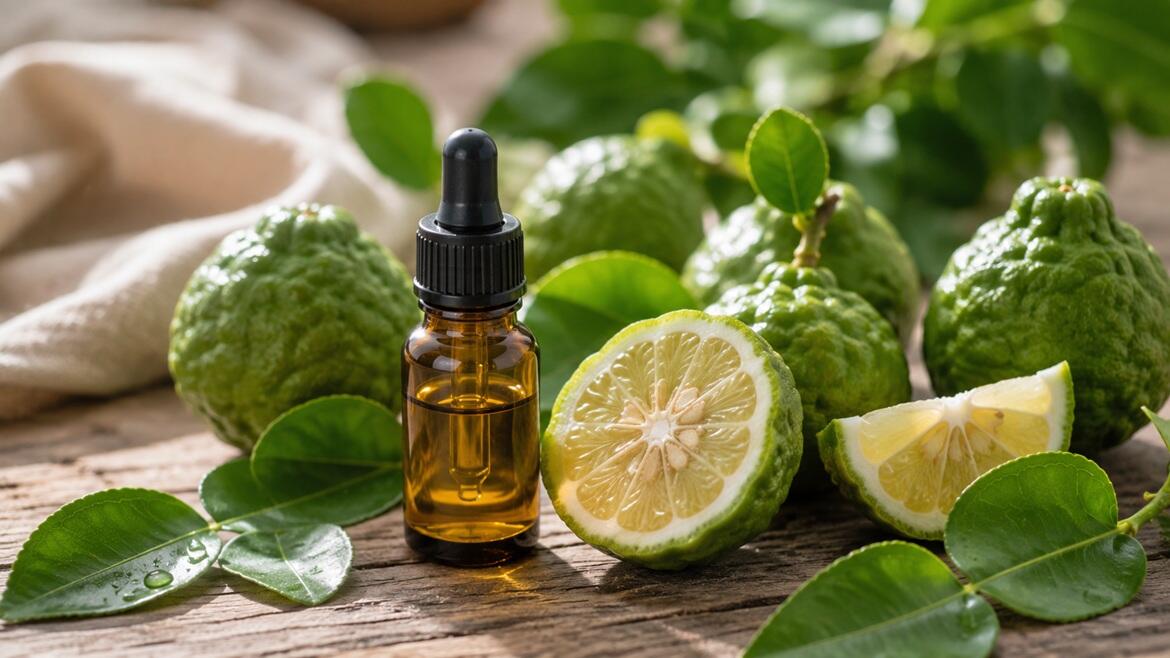
Benefits, Uses, and Scientific Evidence
Bergamot essential oil is one of the most distinctive oils used in aromatherapy, valued for its refreshing citrus aroma and powerful psycho-emotional effects. It has a broad range of applications, from skin and digestive support to stress and anxiety management and mood regulation. Traditional aromatherapy knowledge is largely consistent with findings from modern clinical research.
Bergamot Essential Oil – General Information
Botanical (Latin) Name:Citrus bergamia
Plant Family: Rutaceae
Origin: Calabria, Southern Italy, Sicily
Extraction Method: Cold pressing or distillation
Plant Part Used: Fruit peel
Color: Pale yellow to greenish
Aroma Profile: Sweet, fresh, citrusy, and slightly floral
Aromatic Note: Top note
Chemical Composition (Key Active Components)
The therapeutic properties of bergamot essential oil are primarily associated with its ester and monoterpene content. The principal constituents commonly identified through GC/MS analysis include:
- Limonene
- Linalyl acetate
- Linalool
- β-Pinene
- γ-Terpinene
- Bergapten (in non-FCF oils)
These constituents are associated with anxiolytic, antispasmodic, antifungal, and sebum-balancing effects.
History and Traditional Use
Bergamot takes its name from the city of Bergamo in Italy’s Calabria region. In addition to being one of the foundational ingredients of perfumery for centuries, it has traditionally been used in folk medicine for digestive problems and nervous tension.
In traditional aromatherapy, bergamot is described as:
“Neither entirely calming nor stimulating, but balancing.”
Its effects may vary depending on the other essential oils with which it is blended.
Benefits of Bergamot Essential Oil
Supported by scientific research and traditional aromatherapy knowledge.
Skin Health Support
Thanks to its sebum-balancing and antimicrobial properties, bergamot essential oil is particularly used to support oily and problem-prone skin. In traditional aromatherapy, it has been used for acne, oily skin, oily scalp, cold sores, and weeping eczema.
For conditions such as vitiligo and psoriasis, it should only be considered under professional guidance. [1] [2]
Digestive System Support
Bergamot essential oil may help regulate digestive function and relieve stress-related stomach and intestinal discomfort.
It may help balance appetite in cases of poor appetite and provide relief from indigestion and nausea. Thanks to its antispasmodic properties, it is also used in aromatherapy as supportive care for digestive complaints accompanied by colic and spasms. [3]
Stress, Anxiety, and Mood Regulation
Bergamot essential oil is considered one of the most powerful emotional balancing oils in aromatherapy.
When used through inhalation, it may help relieve stress, nervous tension, restlessness, anxiety, and low mood. In cases of insomnia, it may support the transition to sleep by promoting mental relaxation. [1] [5]
Stimulating or Calming? Bergamot’s Adaptive Effect
The effects of bergamot essential oil may change depending on the oils with which it is blended:
- Clary sage + bergamot: Calming and relaxing
- Eucalyptus + bergamot: Revitalizing and mentally stimulating
This adaptive quality makes bergamot a distinctive choice for both daytime and evening formulations. [1]
Women’s Health and Emotional Fluctuations
Bergamot essential oil is used in aromatherapy to support mood changes associated with PMS and menopause.
Its emotionally balancing properties may help soften mood fluctuations and support psychological well-being. [4]
Safety Information
- Bergamot essential oil should not be applied to the skin without dilution.
- Cold-pressed bergamot essential oil may be phototoxic. After topical application, the treated skin should not be exposed to direct sunlight for 12 hours.
- FCF bergamot oil, from which bergapten has been removed, should be preferred.
- A patch test is recommended for sensitive skin.
- Professional guidance should be sought before use during pregnancy or breastfeeding and when using it with children.
Scientific References
[1] Navarra, M., et al. (2015). Citrus bergamia Essential Oil: From Basic Research to Clinical Application. Frontiers in Pharmacology.
[2] Li, X., Zhang, M., Liu, Y., Feng, Y., Yang, J., Xie, Y., Li, Y., Xu, Y., & Huang, Z. (2026). Recent Advances in the Development of Bergamot (Citrus bergamia* Risso) Essential Oil: From Extraction, Chemical Composition, Function to Potential Applications.* Industrial Crops and Products, 240, 122617.
[3] Rombolà, L., Straface, M., Scuteri, D., Sakurada, T., Sakurada, S., Corasaniti, M. T., Bagetta, G., & Morrone, L. A. (2022). Antispasmodic Effect of Bergamot Essential Oil on Rat Isolated Gut Tissues. Pharmaceutics, 14(4), 775.
[4] Özer, E., Döner, Ş. İ., & Dağ Tüzmen, H. (2025). The Effect of Aromatherapy Intervention with Bergamot and Grapefruit Essential Oils on Premenstrual Syndrome and Menstrual Symptoms: A Randomized Controlled Trial. BMC Complementary Medicine and Therapies, 25, 162.
[5] Han, X., et al. (2017). Bergamot (Citrus bergamia) Essential Oil Inhalation Improves Positive Feelings in the Waiting Room of a Mental Health Treatment Center: A Pilot Study. Phytotherapy Research, 31(5), 812–816.

Patchouli Essential Oil (Pogostemon cablin)

Eucalyptus Essential Oil (Eucalyptus globulus)

Niaouli Essential Oil (Melaleuca quinquenervia)

Myrtle Leaf Essential Oil (Myrtus communis)

Lemon Essential Oil (Citrus limon)

