
Avocado Oil (Persea americana)
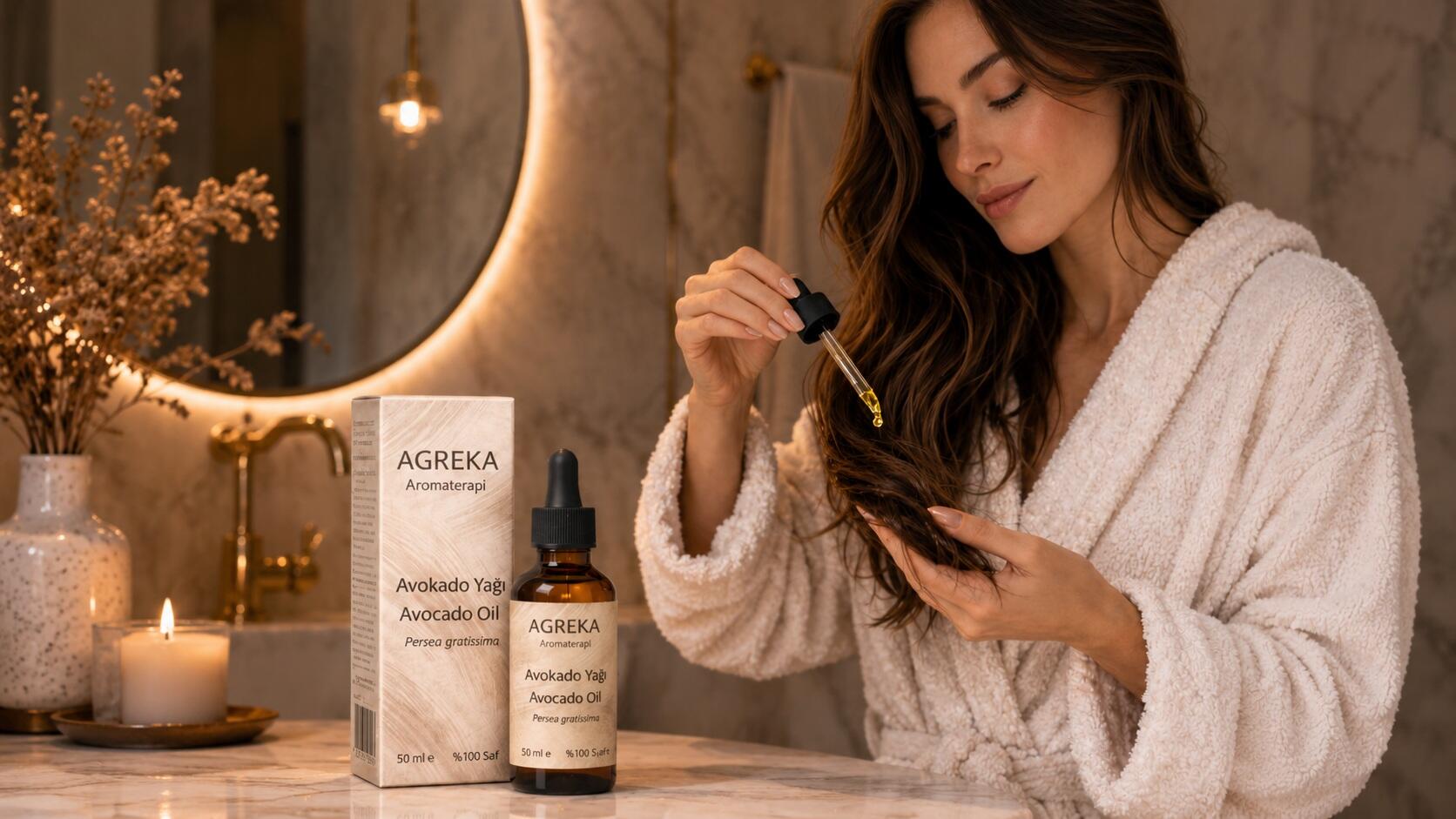
Benefits, Uses, and Scientific Evidence
Avocado oil is a rich, nourishing carrier oil with a soft, slightly nutty aroma. It is particularly valued for supporting skin barrier repair, providing intensive moisturization, offering anti-inflammatory support, nourishing the hair, and delivering antioxidant protection.
Its long history of traditional use in Central and South America is supported by modern dermatological and biochemical research.
Avocado Oil – General Information
Botanical (Latin) Name:Persea americana
Origin: Mexico, Central America, Australia, New Zealand
Extraction Method: Cold-pressed
Plant Part Used: Fruit pulp
Color: Greenish to golden yellow
Texture: Rich and nourishing
Comedogenic Rating: 2–3
Suitable Skin Types: Dry, mature, elasticity-loss, sensitive, and barrier-impaired skin
Chemical Composition (Key Active Components)
Avocado oil contains a high concentration of monounsaturated fatty acids together with biologically active compounds, including:
- Oleic acid (Omega-9) – the primary fatty acid
- Palmitic acid
- Linoleic acid (Omega-6)
- Phytosterols (β-sitosterol)
- Vitamin E (tocopherols)
- Carotenoids (lutein)
These constituents are responsible for avocado oil’s skin barrier-supporting, antioxidant, and anti-inflammatory properties.
History and Traditional Use
Avocado (Persea americana) is native to Mexico and Central America and has been associated with human civilization since ancient times. Archaeological evidence indicates that avocados were consumed in Mexico as early as 8000–7000 BCE, while cultivation is believed to have begun around 5000 BCE throughout Central and South America.
The Aztecs, Mayans, and Incas used avocados both as a food and for cosmetic purposes. Historical records suggest that mashed avocado pulp was traditionally applied to help protect the skin, support wound care, and nourish the hair.
Following the Spanish exploration of the Americas during the Columbian Exchange, avocados were introduced to Europe and gradually spread to other regions of the world. Between 1830 and 1880, avocado trees were brought from Mexico to Hawaii, Florida, and California. During the 20th century, commercial breeding programs in the United States established California as a major production center. Today, Mexico remains the world’s largest producer of avocados.
Unlike most fruits, which are predominantly composed of carbohydrates, avocados are naturally rich in healthy fats. The majority of their lipid content consists of monounsaturated fatty acids, particularly oleic acid. On average, avocado oil contains approximately 12–15% saturated fat, 13–15% polyunsaturated fat, with the remainder consisting primarily of monounsaturated fatty acids.
Avocados are also naturally rich in vitamin K, folate, vitamins C, E, B5, and B6, as well as minerals such as potassium.
Today, avocado oil is widely recognized in modern dermocosmetics as a valuable carrier oil, especially for dry, sensitive, mature, and barrier-impaired skin.
Benefits of Avocado Oil
1. Skin Barrier Repair and Intensive Moisturization
Avocado oil provides nourishing and restorative support for:
- Dry and very dry skin
- Impaired skin barrier function
- Atopic-prone skin
Its high oleic acid content has been reported to help reduce transepidermal water loss (TEWL). [1] [2] [3] [4]
2. Anti-Inflammatory and Soothing Effects
Its phytosterol and tocopherol content may help soothe redness, itching, sensitivity, and inflammatory skin conditions. [2] [3] [4]
3. Wound Healing and Tissue Support
Experimental studies have demonstrated that avocado oil may support the wound healing process and contribute to collagen synthesis. [1] [2]
4. Hair and Scalp Nourishment
Avocado oil provides intensive nourishment and strengthening support for dry and damaged hair, dry scalp, and dull-looking hair. Its oleic acid and vitamin E content help support hair fiber elasticity. [5] [6]
5. Antioxidant Protection Against Free Radicals
Thanks to its high levels of tocopherols and carotenoids, avocado oil plays a supportive role in protecting the skin against oxidative stress. [1] [7] [8]
Safety Information
- Avoid direct contact with the eyes. If contact occurs, rinse thoroughly with plenty of water.
- Do not use if you have a known allergy to any of the product’s ingredients.
- A patch test on a small area of skin is recommended before first use.
Scientific References
[1] Dewi, R. H. T. M., Sholihah, N., Nofitasari, R., & Adhityasmara, D. A. (2024). The Potential of Avocado Oil for Topical Use: A Narrative Review. JIFFK – Jurnal Ilmu Farmasi dan Farmasi Klinik. 21(1):106.
[2] de Oliveira, A. P., et al. (2013). Effect of Semisolid Formulation of Persea americana Mill. (Avocado) Oil on Wound Healing in Rats. Evidence-Based Complementary and Alternative Medicine. 2013:472382.
[3] Park, E., Kim, G.-N., & Kim, H.-O. (2013). Effect of Moisturizer Containing Avocado Oil on Skin Moisture and Personal Satisfaction. Korean Journal of Aesthetic Cosmetology. 11(5).
[4] Lin, T. K., et al. (2018). Anti-Inflammatory and Skin Barrier Repair Effects of Topical Plant Oils. International Journal of Molecular Sciences. 19(1):70.
[5] Park, S., et al. (2021). Fatty Acid Derivatives Isolated from the Oil of Persea americana (Avocado) Protect Against Neomycin-Induced Hair Cell Damage. Plants. 10:171.
[6] Dreher, M. L., & Davenport, A. J. (2013). Hass Avocado Composition and Potential Health Effects. Critical Reviews in Food Science and Nutrition. 53(7):738–750.
[7] Nascimento, A. P. S., et al. (2025). Bioactive Compounds, Technological Advances, and Oxidative Stability of Avocado Oil. Foods. 2025;14(15):2746.
[8] Lin, X., et al. (2024). Key Components and Multiple Health Functions of Avocado Oil. Journal of Functional Foods. Volume 122, November 2024, 106494.

Patchouli Essential Oil (Pogostemon cablin)

Eucalyptus Essential Oil (Eucalyptus globulus)

Niaouli Essential Oil (Melaleuca quinquenervia)

Myrtle Leaf Essential Oil (Myrtus communis)

Lemon Essential Oil (Citrus limon)

