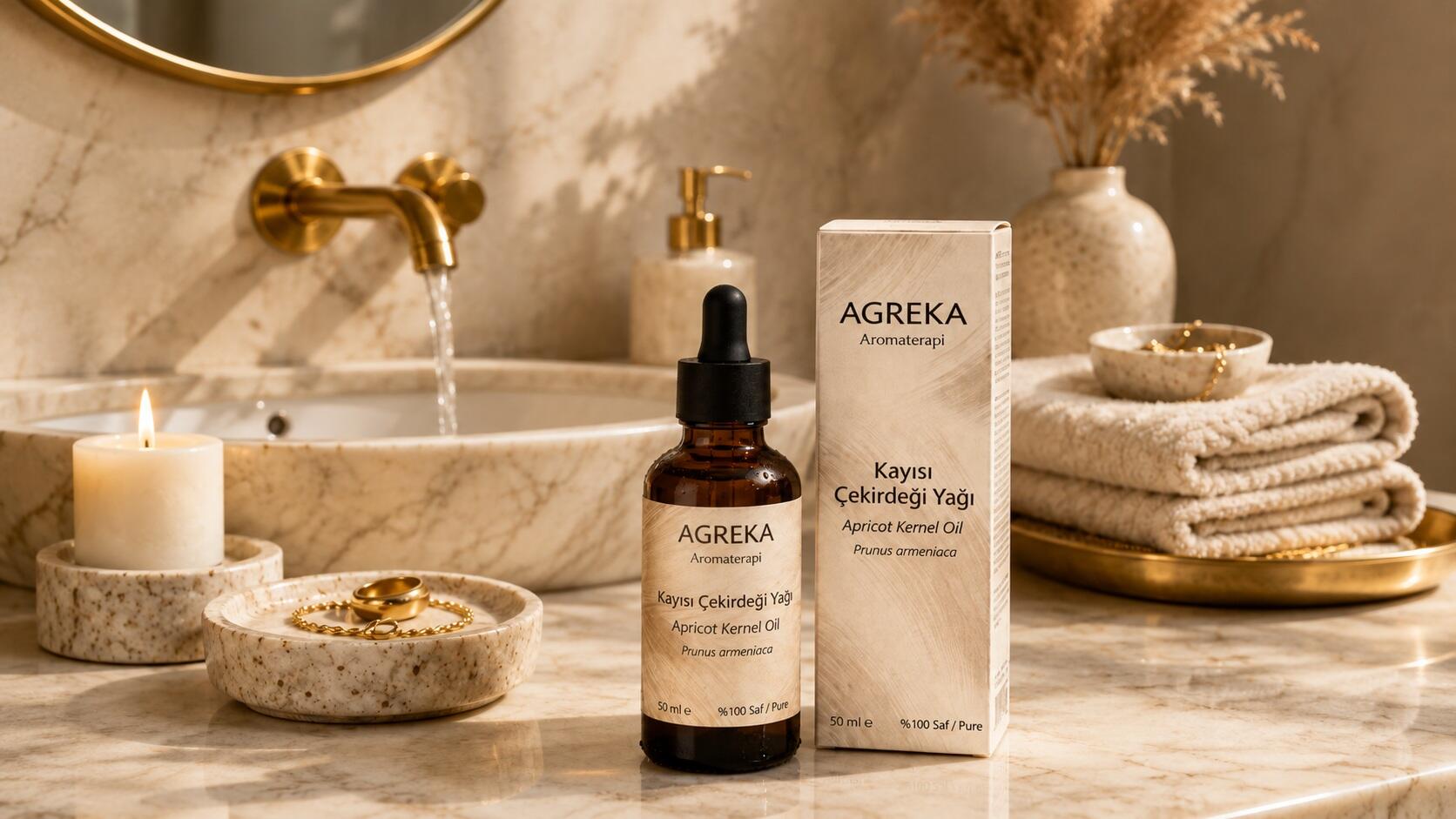
Apricot Kernel Oil (Prunus armeniaca)
Benefits, Uses, and Scientific Evidence
Apricot kernel oil is a gentle carrier (fixed) oil valued for its lightweight, silky texture and rapid absorption. It is particularly used to support sensitive skin, baby skin care, mature skin, and skin hydration.
Its high content of oleic acid and linoleic acid helps support the skin barrier while promoting softness and elasticity.
Apricot Kernel Oil – General Information
Botanical (Latin) Name:Prunus armeniaca
Origin: Africa, Türkiye, Mediterranean region
Extraction Method: Cold-pressed
Plant Part Used: Kernel (seed)
Color: Pale yellow to golden
Texture: Lightweight, silky, and fast-absorbing
Comedogenic Rating: 2
Suitable Skin Types: Sensitive, dry, normal, and mature skin
Chemical Composition (Key Active Components)
The biological properties of apricot kernel oil are associated with its rich fatty acid profile and antioxidant content, including:
- Oleic acid (Omega-9, approximately 60–70%) – the principal fatty acid
- Linoleic acid (Omega-6)
- Palmitic acid
- Vitamin E (tocopherols)
- Phytosterols
These constituents are responsible for the oil’s skin barrier-supporting, emollient, and antioxidant properties.
History and Traditional Use
The exact origin of the apricot (Prunus armeniaca) remains uncertain. Archaeobotanical and historical evidence indicates that the species was domesticated in Central Asia and China, from where it spread westward along the Silk Road. While some early sources suggest an Indian origin, modern botanical research generally recognizes China and Central Asia as the primary centers of genetic diversity.
In Ancient China, the apricot tree became associated with learning and scholarship. Traditional accounts describe physicians and philosophers teaching beneath apricot trees, making the species a cultural symbol of knowledge and medicine.
There are differing theories regarding the arrival of apricots in Anatolia. One suggests that the species was introduced through Persia and the Caucasus during Alexander the Great’s Asian campaigns (4th century BCE). Another proposes that it spread throughout the Mediterranean during the Roman Empire via soldiers and established trade routes in the Near East.
The species name “armeniaca” is believed to reflect the plant’s historical introduction into Europe through Armenia.
Today, Türkiye is one of the world’s largest apricot producers, with the Malatya region being especially renowned for its cultivation.
Cold-pressed apricot kernel oil is naturally rich in oleic and linoleic acids, giving it a lightweight, fast-absorbing, and highly emollient character. In modern cosmetics, it is widely used as a gentle carrier oil in formulations designed for sensitive, dry, and reactive skin. Its lipid profile helps support the skin barrier while promoting nourishment and elasticity.
Benefits of Apricot Kernel Oil
1. Skin Softening and Elasticity Support
Apricot kernel oil provides nourishing and softening support for dry, flaky skin, reduced skin elasticity, and the appearance of fine lines. [1] [2]
2. Skin Barrier Support
Its oleic and linoleic acid content helps reduce transepidermal water loss (TEWL) while supporting the integrity of the skin’s natural lipid barrier. [3]
3. Antioxidant Protection
Its naturally occurring tocopherols help protect the skin against oxidative stress. [4] [5]
Safety Information
- Apricot kernel oil is generally well tolerated.
- Individuals with allergies to stone fruits should use it with caution.
Scientific References
[1] Pawar, K. R., Patil, V. R., & Reddy, K. B. (2023). Apricot Kernel Characterization, Oil Extraction, and Its Applications. Journal of Food Science and Technology.
[2] Stryjecka, M., et al. (2019). Chemical Composition and Antioxidant Properties of Oils from the Seeds of Five Apricot (Prunus armeniaca* L.) Cultivars.* Journal of Oleo Science. 68(8):729–738.
[3] Bouwstra, J. A., Gooris, G. S., Dubbelaar, F. E. R., & Ponec, M. Structure of the Skin Barrier and Its Modulation by Vesicular Formulations. Progress in Lipid Research. 2000;39(1):1–18.
[4] Raj, V., Jain, A., & Chaudhary, J. (2012). Prunus armeniaca (Apricot): An Overview. Journal of Pharmacy Research. 5(8):3964–3966.
[5] Kalyoncu, H. I., Akbulut, M., & Coklar, H. (2009). Antioxidant Capacity, Total Phenolic Content and Some Chemical Properties of Semi-Matured Apricot Cultivars Grown in Malatya, Türkiye. World Applied Science Journal. 6:519–523.

Patchouli Essential Oil (Pogostemon cablin)

Eucalyptus Essential Oil (Eucalyptus globulus)

Niaouli Essential Oil (Melaleuca quinquenervia)

Myrtle Leaf Essential Oil (Myrtus communis)

Lemon Essential Oil (Citrus limon)

