
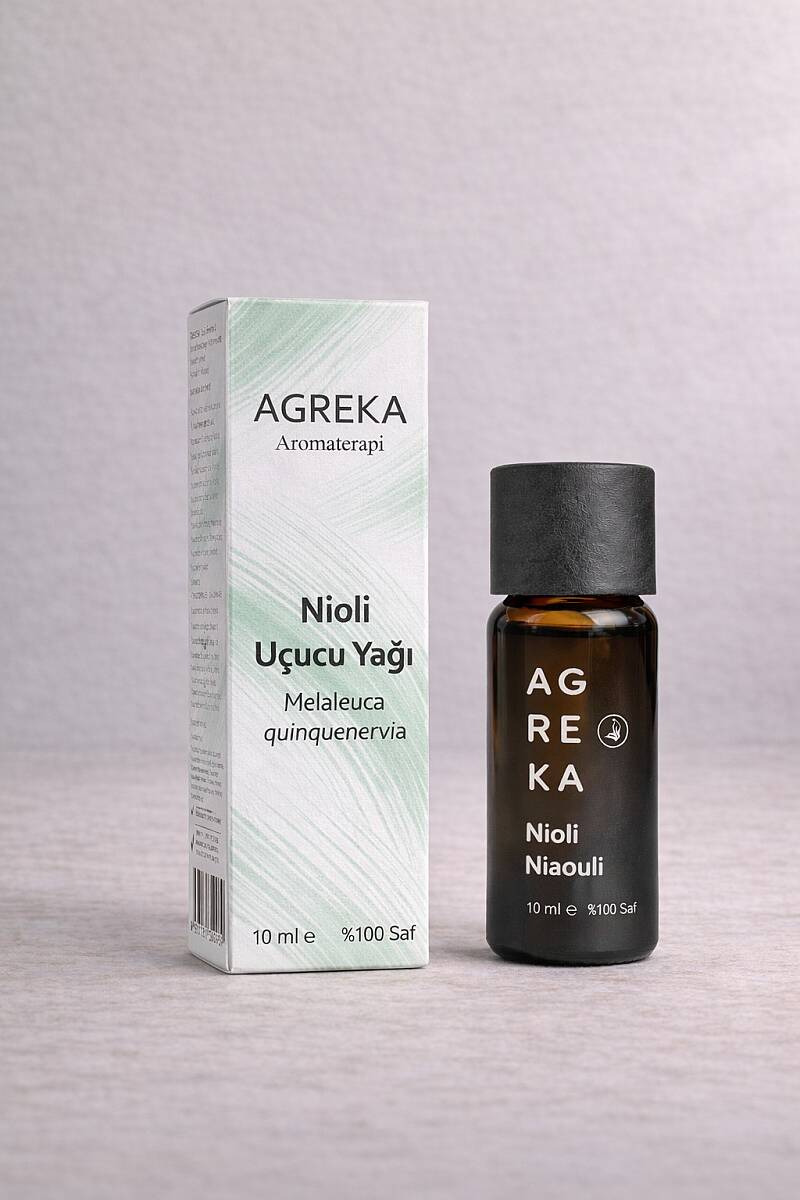
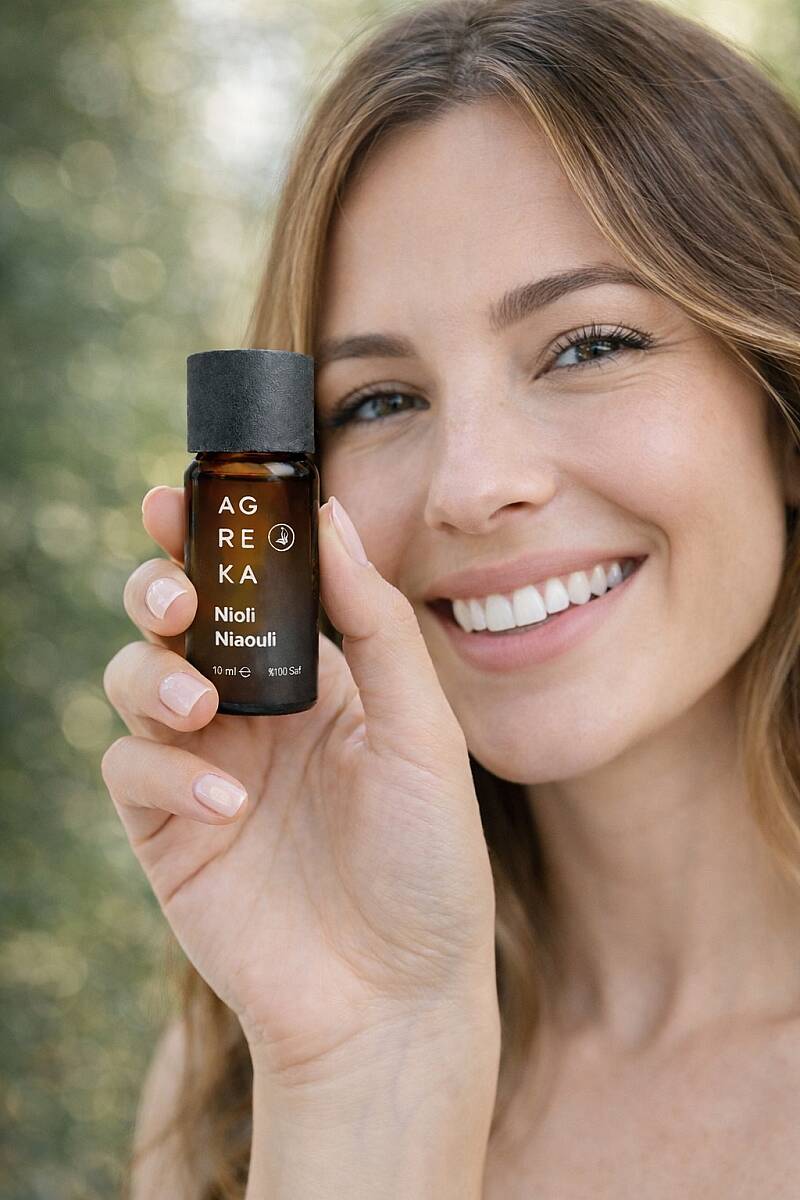
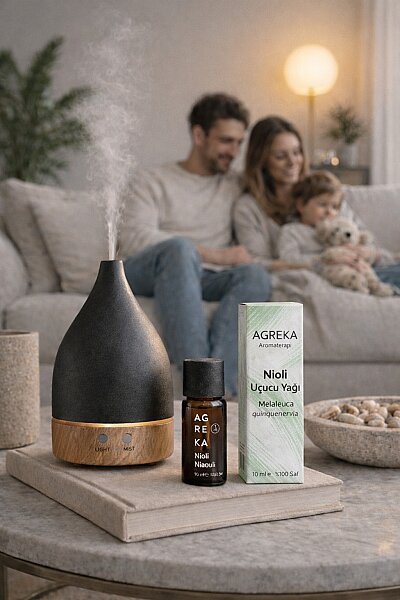
Niaouli Essential Oil 10 ml
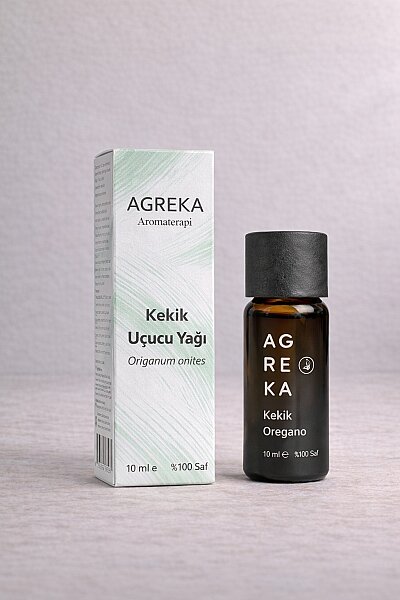
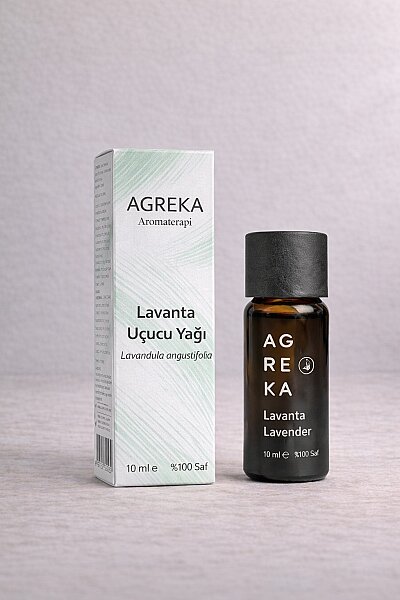
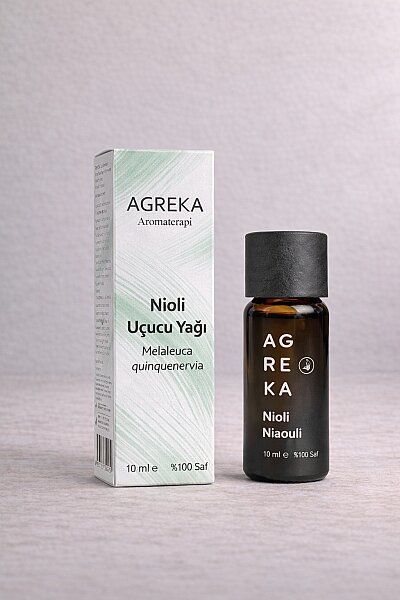


Niaouli Essential Oil (Melaleuca quinquenervia) is one of the essential oils well known in aromatherapy for its purifying and refreshing properties. It is especially valued for use in skincare routines, freshening indoor air, and a variety of aromatherapy applications.
Niaouli Essential Oil is obtained from the leaves and young branches of the niaouli tree through steam distillation. Its naturally occurring 1,8-cineole and viridiflorol constituents are responsible for its characteristic aromatic profile.
Agreka Niaouli Essential Oil is 100% pure and contains no additives.
Botanical Information
Ingredients: Melaleuca Quinquenervia Leaf Oil (Niaouli Oil), Limonene* (*Natural constituent of the essential oil)
Botanical (Latin) Name: Melaleuca quinquenervia
Plant Family: Myrtaceae (Myrtle Family)
Origin: Madagascar
Extraction Method: Steam Distillation
Plant Part Used: Leaves
Color: Clear and colorless
Aromatic Profile: Fresh, slightly bitter, sharp
Aromatic Note: Middle to Base Note
Product Information
Who Can Use It?
- Suitable for adults and children 6 years of age and older. Not recommended for children under 6 years of age.
- For children aged 6–12 years, use only in low concentrations and under the guidance of a healthcare professional.
Intended Uses / Product Benefits:
1. Supports Skin Care
Niaouli Essential Oil is traditionally used in aromatherapy as a purifying essential oil for oily and blemish-prone skin. It may also help soothe irritated skin. Its cleansing properties may help promote a clearer, healthier-looking complexion while supporting the appearance of smoother skin and reducing the visible appearance of blemishes and post-blemish marks.
2. Supports Women's Intimate Care
When properly diluted, Niaouli Essential Oil is traditionally used in aromatherapy as part of intimate care routines.
3. Helps Freshen Indoor Air
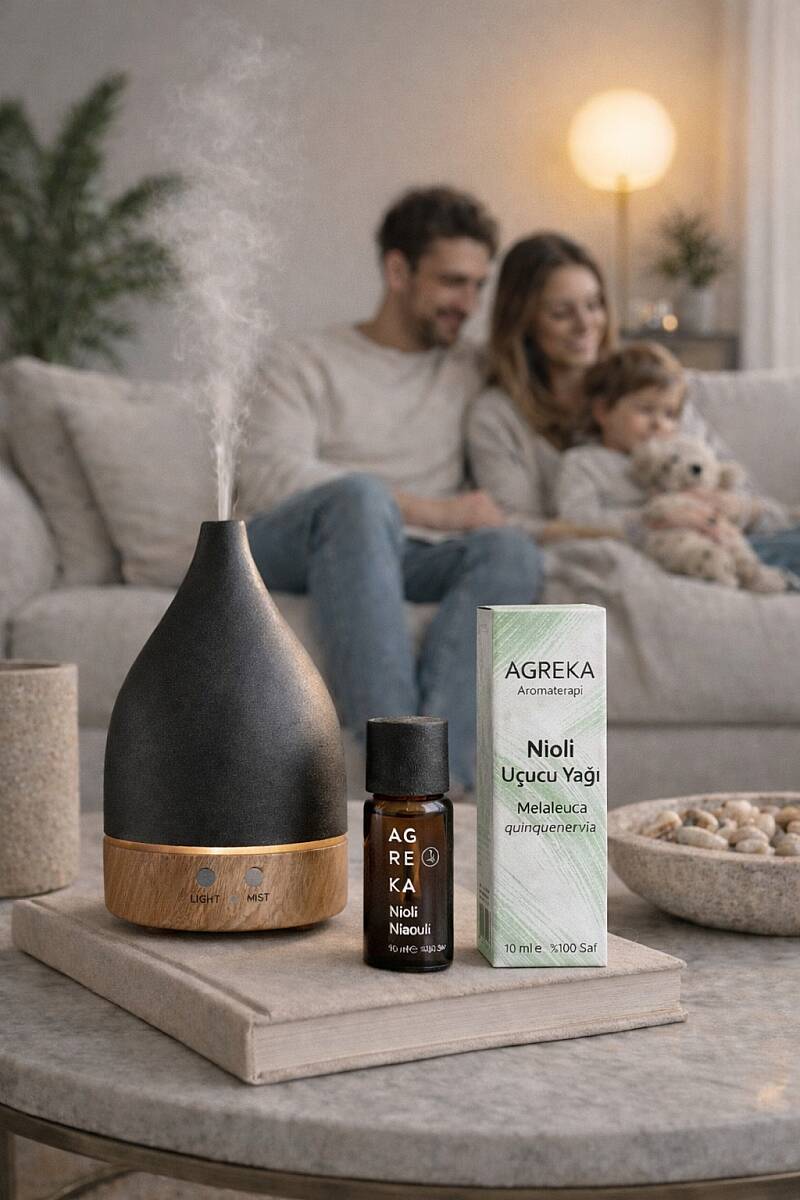
When used in a diffuser or oil burner, it may help freshen indoor air and promote a feeling of easier breathing. It is traditionally used in aromatherapy to support overall wellness during seasonal changes.
4. Supports Foot Care
Can be used diluted as part of foot hygiene and foot care routines.
CLICK HERE TO READ OUR BLOG ARTICLE
Directions for Use
1) Topical Application
Add 1–2 drops of Niaouli Essential Oil to 1 teaspoon (5 ml) of a carrier oil. Mix well and massage gently onto the desired area using circular motions.
2) Inhalation
Add 6–10 drops of Niaouli Essential Oil to your diffuser or oil burner. Run for 30 minutes, then turn it off. This can be repeated 1–2 times daily.
- Children aged 6–12: Use 3–4 drops and diffuse for 15 minutes.
3) Steam Inhalation
Add 3–4 drops of Niaouli Essential Oil to 500 ml of hot water in a glass bowl. Cover your head and the bowl with a towel, keep your eyes closed, and inhale deeply for 5–10 minutes.
4) Intimate Care
Fill a basin or sitz bath with warm water. Add 5 drops of Niaouli Essential Oil to 1 cup of full-fat milk and mix thoroughly. Pour the mixture into the warm water and soak for 15 minutes. When properly diluted, this method may be used as part of an aromatherapy-based intimate care routine.
Safety Information
Legal Disclaimer
In compliance with applicable laws and advertising regulations, we do not promote herbal wellness products by referring to specific diseases or therapeutic indications.
Our products are not medicines; they are herbal wellness products. They are not intended to diagnose, treat, cure, or prevent any disease. The benefits mentioned are based on academic research regarding the individual ingredients.
Storage Conditions
Store tightly closed in a cool, dry place, out of the reach of children and protected from direct sunlight.
Safety & Warnings
- This is a highly concentrated essential oil and should not be applied directly to the skin. Always dilute with a carrier oil before topical use.
- Avoid contact with the eyes, mucous membranes, and irritated or damaged skin.
- If you are pregnant, breastfeeding, or have epilepsy, asthma, or any other medical condition, consult a healthcare professional before use.
- Excessive use may cause adverse reactions.
- Essential oils rich in 1,8-cineole may affect the central nervous system (CNS) and breathing in young children. Do not apply to the face or areas near the face of children. Not recommended for children under 6 years of age.
- For external use only. Do not ingest.
- Avoid contact with the eyes. If contact occurs, rinse thoroughly with plenty of water.
- May be toxic to cats.
Frequently Asked Questions
1) What is Niaouli Essential Oil used for?
Niaouli Essential Oil is commonly used in aromatherapy as part of skincare blends, diffuser applications, and a variety of aromatic wellness routines.
2) Can Niaouli Essential Oil be applied to the skin?
Yes, but it is not recommended to apply it directly to the skin. Dilute 1–2 drops in 5 ml (1 teaspoon) of a carrier oil before topical application.
3) Can Niaouli Essential Oil be used in a diffuser?
Yes. Add 6–10 drops to a diffuser or oil burner to help freshen indoor air and create a clean, refreshing atmosphere.
4) Can Niaouli Essential Oil be used for intimate care?
When properly diluted, Niaouli Essential Oil is traditionally used in aromatherapy as part of intimate care routines. For this type of application, it should always be used at a low dilution.
5) Is Niaouli Essential Oil similar to Tea Tree Essential Oil?
Yes. Niaouli and Tea Tree belong to the same Melaleuca genus. As a result, they share certain similarities in their aromatic profile and traditional aromatherapy uses.
Academic References
[1] Acha, E. et al. Anti-inflammatory properties of Melaleuca quinquenervia leaves essential oil. Journal of Chemical and Pharmaceutical Research, 2019, 11(1): 36-50
[2] U. R Juergens (2014). Anti-inflammatory Properties of the Monoterpene 1.8-cineole: Current Evidence for Co-medication in Inflammatory Airway Diseases. May 2014Drug Research 64(12)
[3] Nam, S.Y., Chang, M.H., Do, J.S., Seo, H.J. & Oh, H.K. (2008). Essential oil of niaouli preferentially potentiates antigen-specific cellular immunity and cytokine production by macrophages. Immunopharmacology and Immunotoxicology, 30, 459–474.
[4] Valkova, V., ´ Dˇ uranov ´ a, H., Vukovic, N.L., Vukic, M., Kluz, M. & ´ Kacˇaniov ´ a, M. (2022). Assessment of chemical composition and ´ anti-penicillium activity of vapours of essential oils from Abies Alba and two melaleuca species in food model systems. Molecules, 27, 3101.
[5] Sobhy, M., Ali, S.S., Cui, H., Lin, L. & El-Sapagh, S. (2023). Exploring the potential of 1,8-cineole from cardamom oil against food-borne pathogens: antibacterial mechanisms and its application in meat preservation. Microbial Pathogenesis, 184, 106375.
[6] A. Diallo, Y. Tine, A. Diop, I. Ndoye (2020). Chemical Composition and Antibacterial Activity of Essential Oil of Melaleuca quinquenervia (Cav.) S.T. Blake (Myrtaceae). May 2020Asian Journal of Applied Chemistry Research.
[7] J-F Yala, R. M. Mabika, B. Camara, S. Tuo, A. Souza, A. N. Lepengue, D. Koné, B. M’batchi (2017). Assessment of the antibacterial activity of four essential oils and the biobactericide Neco. International Journal of Phytomedicine, Vol. 9, No. 3, 2017.
[8] Shakeel, F. et al, Nanoemulsification Improves the Pharmaceutical Properties and Bioactivities of Niaouli Essential Oil (Melaleuca quinquenervia L.). Molecules 2021, 26(16), 4750;
[9] Polat, R. K. et al. Antifungal and Antibiofilm Effects of Melaleuca viridiflora Niaouli Oil and Propolis on Candida spp. Isolated from Vulvovaginal Candidiasis. Istanbul J Pharm. 2025.1652143
[10] Silva, R.A. et al. Essential Oils of Melaleuca, Citrus, Cupressus, and Litsea for the Management of Infections Caused by Candida Species: A Systematic Review. Pharmaceutics. 2021 Oct 15;13(10):1700
